Standing water, soggy grass, washed-out mulch, and erosion can all indicate that rainwater is not moving through a property correctly.
The right solution depends on where the water comes from, how it travels across the yard, and where it can be discharged safely. A drain that works for water collecting beside a patio may not solve runoff moving across an entire lawn.
Landscape drainage systems may include grading, catch basins, underground drain pipe, channel drains, downspout extensions, and other components. Some properties need one improvement, while others require several methods working together.
For homeowners in St. Petersburg and surrounding Florida communities, drainage planning should account for heavy rain, sandy soil, low areas, patios, driveways, irrigation, and neighboring elevations.
Begin by Finding the Source of the Water
A drainage problem should be evaluated before a specific product or system is selected.
Water may enter the yard from several locations, including:
- Roof downspouts
- A higher neighboring property
- Driveways and walkways
- Patios and pool decks
- Irrigation systems
- Low lawn areas
- Sloped landscape beds
- Compacted soil
- Overflowing drainage components
The place where water collects is not always where the problem begins. Runoff may travel across the property before settling in the lowest area.
Watching the yard during heavy rain can provide useful information. Photos and videos may also help show the direction and speed of the water after the storm has passed.
What Is a Landscape Drainage System?
A landscape drainage system manages surface water and, in some situations, water moving through the soil.
The goal is to collect, redirect, slow, or disperse excess water without creating another problem elsewhere.
A drainage system may contain:
- Catch basins
- Drainage pipe
- Channel drains
- Downspout connections
- Gravel or drainage stone
- Grading improvements
- Surface inlets
- Discharge outlets
The correct design depends on the property. Installing a drain without evaluating the slope and discharge location may only move the standing water to another part of the yard.
Landscape Grading
Grading refers to shaping the surface of the property so water travels in an appropriate direction.
A yard should generally direct water away from the home and toward a suitable drainage area. Low spots, settled soil, and poorly shaped landscape beds may interrupt that flow.
Minor grading may help when water collects in a shallow depression or moves toward a patio or walkway.
However, adding soil without a complete plan can create new concerns. Raising one section may redirect water toward a door, neighboring property, landscape bed, or another low area.
Grading should consider:
- The elevation of the home
- Patios and driveways
- Neighboring properties
- Existing drains
- Downspout locations
- Fence lines
- Landscape beds
- Tree roots
The finished surface should also support sod and other landscaping without creating abrupt slopes that are difficult to maintain.
Catch Basin Drainage
A catch basin is an inlet installed at a low point where surface water commonly collects.
Water enters through the grate and travels into underground drainage pipe. The basin may also capture some leaves, soil, and debris before they enter the pipe.
Catch basins may be useful near:
- Low lawn areas
- Patio edges
- Downspouts
- Walkways
- Driveways
- Landscape beds
- Pool areas
The grate should remain accessible for cleaning. Grass, mulch, roots, and leaves can eventually restrict water flow.
A catch basin alone will not solve the problem unless the connected pipe has a suitable slope and discharge location.
Underground Drainage Pipe
Underground drainage pipe carries collected water from one area to another.
It may connect to catch basins, downspouts, channel drains, or other drainage inlets. The pipe should be sized and installed according to the amount of water it needs to carry.
Proper slope is important. A pipe that is too flat may hold water or collect sediment. A pipe installed at the wrong elevation may not accept water from the inlet effectively.
The route should also avoid conflicts with:
- Irrigation lines
- Utilities
- Tree roots
- Fence posts
- Paver bases
- Landscape lighting wires
- Future construction areas
Underground pipe must end at an appropriate location. It should not direct water onto a neighboring property or discharge where it causes erosion.
Downspout Drainage
Roof runoff can place a large amount of water into a small part of the yard.
When a downspout empties beside the home, into a low landscape bed, or across a walkway, water may collect or erode the surrounding soil.
A downspout may be extended across the surface or connected to an underground drainage system.
The correct option depends on:
- Roof size
- Downspout location
- Property slope
- Available discharge area
- Nearby landscaping
- Soil conditions
- Distance from the home
Downspout drainage should remain accessible for inspection and cleaning. Leaves and roof debris can enter the system if the gutters are not maintained.
Drainage work around downspouts does not replace gutter repairs. Overflow caused by damaged or clogged gutters should be addressed by a qualified gutter or roofing professional.
Channel Drains
A channel drain is a narrow linear drain designed to collect water across a wider surface.
It may be installed near:
- Patio edges
- Driveways
- Garage entrances
- Pool decks
- Walkways
- Doors
- Areas where runoff crosses pavement
Channel drains can be useful where water moves in a sheet across a hard surface rather than collecting in one small low point.
The drain must connect to a suitable discharge system. Its grate should also remain clear of leaves, mulch, grass clippings, and soil.
The surrounding pavement needs the correct slope so water reaches the channel instead of bypassing it.
Surface Drains Near Patios and Pavers
Patios and paver areas should be installed with enough slope to move water away from the home.
When the surface is too flat or has settled, water may collect between pavers or along the patio edge.
A surface drain may help in some situations, but drainage should not automatically be added without reviewing the hardscape base and slope.
Possible causes of patio water include:
- Settled pavers
- Poor grading
- Blocked drains
- Downspout runoff
- Low patio edges
- Erosion beneath the surface
- Landscape beds directing water toward the patio
Resetting affected pavers or correcting the surrounding grade may be needed along with drainage installation.
French Drains and Subsurface Drainage
A French drain is typically used to collect water moving through saturated soil rather than only water flowing across the surface.
The system generally includes perforated pipe surrounded by drainage stone and suitable filter material.
French drains may be useful in certain wet areas, but they are not the correct solution for every puddle.
A surface basin may collect visible runoff more effectively when water is flowing quickly across the lawn. A French drain may perform poorly if it becomes filled with soil or if it lacks a suitable outlet.
The decision should be based on whether the concern involves surface runoff, saturated soil, or both.
Drainage Stone and Gravel Areas
Drainage stone can help water move through selected areas and may be used around pipes, drains, retaining walls, and other landscape features.
However, placing gravel over a wet area does not automatically correct poor drainage. Water may continue collecting beneath the stone when there is no outlet.
Loose stone may also move during heavy runoff or become mixed with soil and mulch.
Drainage stone should be part of a planned system rather than used only to cover mud or standing water.
Retaining Wall Drainage
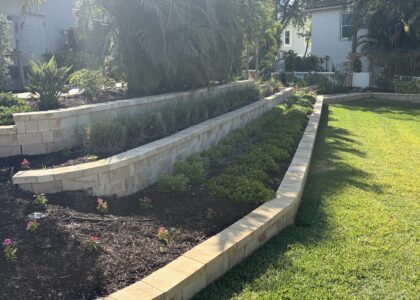
Retaining walls hold soil at different elevations. Water collecting behind the wall can increase pressure on the structure.
Depending on the wall, drainage may include:
- Drainage stone
- Perforated pipe
- Openings for water movement
- Properly prepared backfill
- Grading above the wall
A retaining wall should not be installed without considering where runoff will travel.
Signs of a possible wall drainage problem may include:
- Leaning
- Separating blocks
- Soil washing through joints
- Water collecting behind the wall
- Erosion at the base
- Repeated movement after rain
A wall with significant movement or structural concerns may require evaluation beyond routine landscaping work.
Dry Wells and Water Storage Areas
Some drainage plans use an underground storage area to temporarily hold water and allow it to disperse into the surrounding soil.
Whether this method is appropriate depends heavily on soil conditions, available space, water volume, and local requirements.
A storage system may not perform well where the surrounding soil is already saturated or where groundwater is high.
It should not be selected without understanding how quickly the soil accepts water and what happens during repeated heavy storms.
Swales and Shallow Drainage Paths
A swale is a shallow, shaped area that guides surface water across the landscape.
Unlike an underground pipe, a swale remains part of the visible grade. It may be covered with grass, stone, or suitable plants depending on the design.
Swales can move water gradually without requiring a drain inlet at every point.
However, they need enough slope to function and enough open space to remain unobstructed.
Fences, raised beds, heavy plant growth, and soil buildup can block a swale over time.
Combining More Than One Drainage Method
Many properties need several drainage components working together.
For example, a system may use:
- Downspout connections to collect roof runoff
- Catch basins in low lawn areas
- Underground pipe to carry the water
- Grading to direct runoff toward the inlets
- A channel drain beside a patio
- Drainage stone behind a retaining wall
Each component should support the same overall plan.
Installing unrelated drains without understanding how they connect may create slow flow, overflow, or competing discharge paths.
Drainage and Irrigation Problems Can Look Similar
A wet lawn is not always caused by rain.
Broken irrigation lines, leaking valves, damaged sprinkler heads, and overwatering may create soggy areas that resemble poor drainage.
Run the irrigation system and observe each zone. Look for:
- Water bubbling from the soil
- Heads that continue leaking
- Spray hitting patios or walls
- One section receiving too much water
- Broken pipes
- Wet areas appearing without rain
An irrigation repair may solve the problem when the excess water comes from the system rather than the landscape grade.
Drainage should be evaluated along with irrigation before excavation begins.
How Soil Affects Drainage
Soil conditions influence how quickly water enters and moves through the ground.
Sandy soil may drain quickly in one part of a property, while compacted fill or low soil may hold water nearby.
Construction activity, equipment, repeated foot traffic, and previous landscaping can also compact the surface.
Soil should not be judged only by its appearance. The drainage design should account for how the entire area behaves during and after rain.
Adding topsoil or amendments may improve planting conditions in some areas, but it will not replace a necessary drainage outlet.
Where Can Drainage Water Be Discharged?
Every drainage system needs a suitable place for water to go.
Possible discharge locations depend on the property, local rules, elevation, and surrounding area.
Water should not be directed:
- Against the home
- Across a main walkway
- Onto a neighboring property
- Into a location that already floods
- Where it will wash out soil
- Beneath a fence without planning
- Toward sensitive landscape areas
The discharge point should be evaluated before the inlet and pipe route are finalized.
A drainage system that collects water effectively but has nowhere suitable to release it will not provide a complete solution.
Why Drainage Should Come Before Sod
Installing new sod can temporarily hide low areas and muddy soil.
However, grass may struggle when the drainage problem remains. Water may continue collecting below the sod, causing yellowing, thinning, soft soil, or uneven settlement.
Drainage, grading, and irrigation improvements should generally happen before new sod is installed.
This allows excavation and soil shaping to be completed without damaging a finished lawn.
After the drainage work is tested, the surface can be prepared for sod installation.
Why Drainage Should Come Before Pavers
Drainage work may require trenches, pipes, catch basins, and grading around patios or walkways.
Installing pavers first can make the drainage work more difficult and may require completed sections to be removed.
The hardscape layout should account for:
- Drain locations
- Pipe routes
- Surface slope
- Downspouts
- Patio edges
- Retaining walls
- Discharge points
Planning both systems together can protect the paver base and create cleaner transitions between the hardscape and lawn.
Maintaining a Yard Drainage System
Drainage systems need periodic inspection and cleaning.
Homeowners should check:
- Catch basin grates
- Channel drains
- Downspout connections
- Pipe outlets
- Swales
- Drainage stone
- Areas around retaining walls
- Low lawn sections
Leaves, mulch, roots, soil, and grass clippings can block water entry or discharge.
After heavy rain, observe whether the system drains within a reasonable period and whether water appears in new locations.
A change in performance may indicate a blockage, settlement, root intrusion, or landscape change.
Avoid Covering Drainage Components
Drainage openings can become hidden beneath sod, mulch, plants, or soil.
A concealed drain is difficult to inspect and may stop accepting water.
Landscape beds should be maintained so mulch does not repeatedly wash onto drain grates. Plants should also be spaced far enough away that roots and foliage do not block access.
Drainage outlets should remain visible and protected from damage by lawn equipment.
When a Drainage Assessment Is Appropriate
Consider requesting a professional assessment when:
- Standing water returns after most storms
- Several areas of the property remain soggy
- Mulch or soil repeatedly washes away
- Water crosses patios or walkways
- New sod has failed in wet areas
- Pavers are settling near runoff
- Downspouts create erosion
- A retaining wall shows movement
- Existing drains overflow or drain slowly
- Previous drainage repairs have not worked
The assessment should examine the complete route of the water rather than only the final puddle.
Professional Landscape Drainage Systems in St. Petersburg
The right drainage system depends on the source, volume, direction, and destination of the water.
Catch basins, underground pipe, grading, channel drains, downspout connections, and subsurface drainage can all serve different purposes. Some properties require several of these methods to work together.
CDS Landscaping provides drainage solutions in St. Petersburg, Seminole, Largo, Pinellas Park, Clearwater, and surrounding Florida communities. Drainage work may also be coordinated with irrigation, sod installation, landscape renovation, patios, pavers, and retaining walls.
Contact CDS Landscaping to request a quote and discuss which drainage approach may be appropriate for your property.