Retaining walls can do more than hold soil in place. With the right layout and materials, they can organize a sloped yard, create raised planting areas, define outdoor living spaces, and add structure to the landscape.
The best retaining wall ideas for Florida properties account for heavy rain, sandy soil, humidity, drainage, and the style of the surrounding home. A wall should look like part of the landscape while serving a clear purpose. Before selecting a design, consider why you need the wall, how water moves through the yard, and what other features you plan around it.
Why Add a Retaining Wall to a Florida Yard?
A retaining wall holds soil at different elevations. An installer may place it along a slope, beside a patio, around a raised garden, or wherever the ground level changes.
Depending on the property, a retaining wall can help:
- Hold soil in place
- Organize a sloped yard
- Create flatter, more usable areas
- Define planting beds
- Separate lawns, patios, and gardens
- Support changes in elevation
- Improve the appearance of an unfinished slope
- Manage water movement when paired with proper drainage
A retaining wall is more than a decorative row of blocks. Its design must account for the grade, soil, water, nearby structures, and pressure behind the wall. Homeowners should understand what to know before installing a retaining wall before choosing a layout.
Create a Tiered Landscape on a Slope
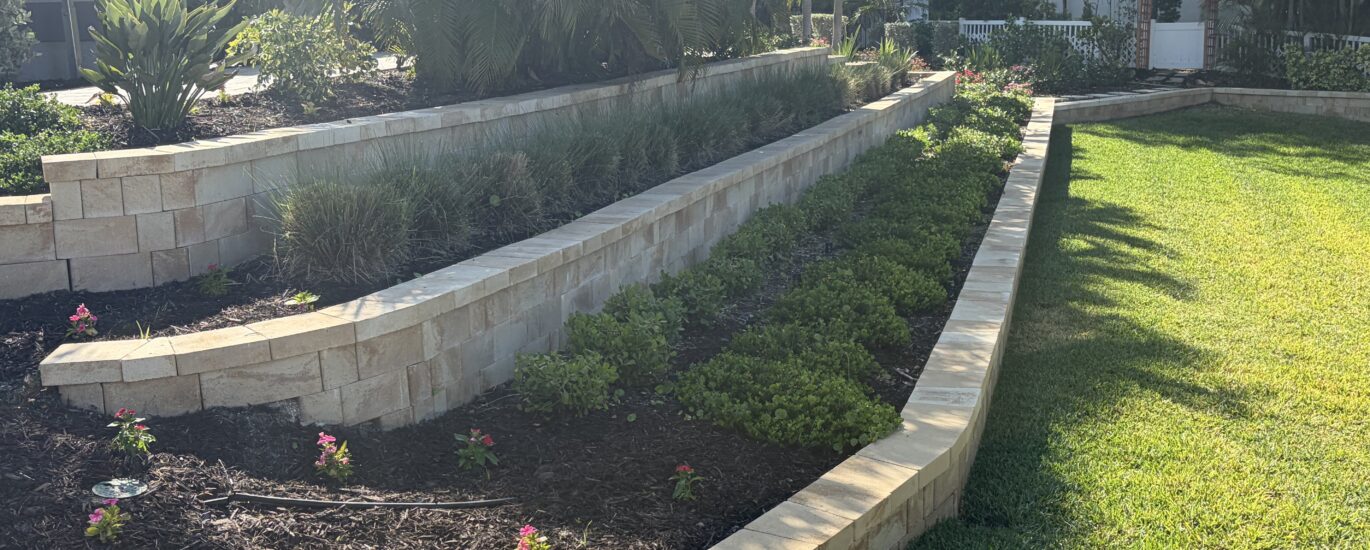
A tiered design divides one steep slope into two or more smaller levels. Each level can become a planting bed filled with shrubs, ornamental grasses, flowers, mulch, or decorative stone.
Terraces add depth to a landscape and may make planting areas easier to reach. They can also prevent one large wall from overpowering a smaller yard.
Base the size and spacing of each tier on the grade and available space. Also, choose plants according to their mature size so they do not crowd the walls or block access.
Build Raised Tropical Planting Beds
A low retaining wall can create a raised bed for palms, flowering shrubs, and Florida-friendly plants. This works well along a driveway, near an entrance, around a patio, or along the edge of a lawn.
Combining plants with different heights, colors, and leaf textures can soften the wall and help it blend into the yard. Plant selection should account for sunlight, irrigation, maintenance, and salt exposure in coastal areas.
Include a raised bed in the larger landscape design and installation plan. Irrigation, drainage, plant spacing, and wall construction all need to work together.
Use a Curved Retaining Wall
Curved retaining walls can soften straight property lines and create a more natural transition between landscape areas. A gentle curve may wrap around a planting bed, lawn, patio, or grouping of trees.
This style fits tropical and informal landscapes, but it also works in more structured designs. The curve should follow the grade of the yard and leave enough room for plants to grow without spilling into walkways.
Repeating the curve in a nearby garden bed or walkway can make the landscape feel more connected.
Frame a Patio or Outdoor Living Area
Retaining walls can help define a patio when the surrounding ground changes elevation. The wall may separate the patio from a raised planting area, hold back a slope, or create a finished border around the outdoor space.
Coordinate wall colors and textures with nearby pavers. The materials do not need to match exactly, but they should complement one another.
Plan grading, drainage, wall construction, and hardscape installation together. Completing underground work and structural features first helps avoid disturbing a finished patio later.
Add Steps Between Landscape Levels
You can include steps in a retaining wall design to connect different parts of the property. They may provide access between a patio and lawn, connect an elevated side yard to the backyard, or create a path through a terraced garden.
The steps can match the wall or use a complementary material. Their width and placement should follow the routes people naturally use through the yard.
Add landscape lighting near steps and changes in elevation to improve visibility after dark. Also, select materials with Florida rain and slip resistance in mind.
Create a Defined Front Entry Garden
A low wall near the front walkway or driveway can create a raised entry garden and make the approach to the home feel more intentional. It can frame a group of plants, follow the curve of a walkway, or separate the lawn from the entrance.
The wall should complement the home’s exterior colors and architecture. Keep plant and wall heights low enough to preserve visibility near the driveway, sidewalk, and street.
A simple design often works best in front yards. Too many competing materials, colors, or wall shapes can make a small entrance feel crowded.
Add Contrasting Caps and Borders
A wall cap creates a finished top edge and can become part of the design. A contrasting cap may coordinate with patio pavers, brick edging, exterior paint, or roof colors.
Subtle color differences can create a traditional appearance. Stronger contrast may work well with modern homes and landscapes.
You can also repeat borders in nearby walkways or planting beds. Using the same few materials throughout the property helps the wall feel connected to the rest of the landscape.
Combine Retaining Walls With Landscape Lighting
Landscape lighting can highlight the wall’s shape and texture while improving visibility around steps, pathways, and elevation changes.
Place fixtures near wall ends, along adjacent planting beds, or around steps. Warm, low-level lighting generally creates a softer effect than bright fixtures aimed directly across the yard.
Plan the lighting layout before construction if wiring needs to pass near or behind the wall.
Retaining Wall Material Ideas
Material selection affects the wall’s appearance, maintenance needs, and suitability for the site.
Concrete wall blocks are available in many colors, textures, and sizes. They suit straight, curved, or tiered layouts and often coordinate well with paver patios and walkways.
Brick and brick-style materials can complement traditional Florida homes. They can also complement brick edging, driveways, and garden paths.
Natural stone creates an organic appearance that pairs well with tropical gardens. Because stone varies in color, size, and shape, the final look depends heavily on the selected material and installation method.
Landscape timbers or wood can fit casual landscape styles, but consider Florida’s moisture, humidity, and insects. Wood may not be suitable for every wall height or location.
Appearance should not be the only consideration. The wall material must also fit the grade, soil pressure, drainage needs, exposure, and required maintenance.
How Drainage Fits Into Retaining Wall Design
Water collecting behind a retaining wall increases pressure against it. A well-planned wall must provide a way for water to move through or away from the soil behind the structure.
Depending on the design, drainage planning may involve grading, drainage stone, drainpipe, and appropriate outlets. Also consider roof runoff and irrigation so water does not continually flow toward the wall.
Coordinate retaining walls with broader drainage solutions when a yard experiences standing water, heavy runoff, or erosion. A wall alone may not correct the source of a drainage problem.
Choosing the Right Retaining Wall Idea
The right design depends on the wall’s purpose, yard slope, soil, drainage conditions, nearby structures, and desired appearance. Homeowners should also consider planting space, material preferences, maintenance, and budget.
Taller walls or walls near buildings and property lines may require additional planning, engineering, or permits. Confirm requirements before construction begins.
Plan Your Retaining Wall With CDS Landscaping
A well-planned retaining wall can make a Florida yard more organized, usable, and visually appealing. It can create planting space, frame a patio, connect different elevations, or become part of a larger drainage and landscape plan.
CDS Landscaping designs and installs retaining walls and other landscape features in St. Petersburg, Seminole, Largo, Pinellas Park, Clearwater, and surrounding areas. Review current retaining wall pricing and contact CDS Landscaping to request an on-site evaluation for your property.