A professional landscape installation involves more than placing a few plants around the yard. A complete project may require property evaluation, removal work, grading, plant selection, irrigation adjustments, drainage improvements, sod, hardscape, lighting, and final cleanup.
The exact scope depends on the condition of the property and what the homeowner wants to change.
Some projects focus mainly on new planting beds. Others involve several services that the crew must plan and complete in the right order.
Understanding the possible scope can help homeowners set priorities, create a realistic budget, and prepare for the work.
A Review of the Existing Property
Every landscape installation should begin with a review of the yard.
The landscaping team needs to understand the current conditions before recommending plants or materials.
The review may include:
- Sun and shade
- Soil condition
- Property grade
- Existing plants
- Lawn condition
- Irrigation coverage
- Drainage patterns
- Roof runoff
- Walkways and patios
- Trees and roots
- Fences and gates
- Access for materials and equipment
The homeowner should also explain how they use the yard and which areas are difficult to maintain.
For example, a side yard may need a clearer walking route. A front bed may contain plants that have outgrown the space. A backyard may need more open lawn or a place for outdoor seating.
The installation should respond to those needs rather than applying the same design to every property.
Removal and Landscape Preparation
Many projects begin with clearing the existing area.
Preparation may include removing:
- Unhealthy plants
- Overgrown shrubs
- Unwanted plants
- Old mulch
- Leaves and landscape debris
- Damaged sod
- Unused edging
- Small landscape features
- Material left from an older project
You can keep some existing features.
Healthy palms, trees, shrubs, walkways, patios, and other features may remain part of the updated landscape. The team should identify which elements still fit the property and which ones interfere with the new plan.
Dense overgrowth may also hide irrigation parts, low areas, roots, or drainage problems. Clearing the site can make these conditions easier to evaluate.
Grading and Soil Preparation
The shape and condition of the ground affect nearly every part of a landscape installation.
A low area may collect rainwater. Soil may be compacted after construction or repeated foot traffic. The crew may also need to reshape beds before adding new materials.
Site preparation may involve:
- Removing excess soil
- Adding soil where appropriate
- Correcting small low areas
- Reshaping planting beds
- Smoothing disturbed sections
- Preparing the ground for sod
- Compacting areas beneath hardscape
- Creating a suitable slope for drainage
The amount of grading depends on the property.
Do not hide drainage or grading problems with plants, sod, or mulch. Instead, prepare the ground before adding the visible materials.
Drainage Improvements
Drainage may be part of a landscape installation when water collects in the yard or moves through the property in an unwanted direction.
Possible warning signs include:
- Standing water
- Soft or muddy soil
- Mulch washing out of beds
- Bare lawn areas
- Water near the house
- Runoff across walkways
- Puddles near downspouts
- Water collecting beside a patio
- Drainage work may include:
- Grade correction
- Catch basins
- Underground pipes
- Downspout connections
- French drains
- Field drains
- Emitter drains
- Channel drains
- Sump pump systems
- Retaining wall drainage
The correct solution depends on where the water begins, where it collects, and where it can safely flow.
Complete drainage work before installing plants, sod, pavers, and mulch. This reduces the need to dig through finished landscaping later.
Irrigation Planning and Installation
A new landscape may require a new irrigation system or changes to an existing one.
Sprinkler coverage should match the new layout. Turf, shrubs, and planting beds may need different watering patterns.
Irrigation planning may consider:
- Plant locations
- New sod areas
- Sun and shade
- Sprinkler head placement
- Zone layout
- Overspray
- Existing hardscape
- Drainage concerns
- Future plant growth
An irrigation system designed for an older yard may not work after planting beds are expanded or a patio is installed.
The crew may need to move, replace, adjust, or cap sprinkler heads. Larger system problems may require broader repairs or a system update.
Irrigation work is usually easier to complete before sod, plants, mulch, and hardscape are finished.
A Site-Specific Planting Plan
Choose plants to suit the actual conditions of the property.
A plant may look appealing at a nursery but still be a poor fit for a specific bed.
The design should consider:
- Daily sunlight
- Available shade
- Soil drainage
- Mature height
- Mature width
- Irrigation coverage
- Wind exposure
- Salt exposure near coastal areas
- Distance from structures
- Distance from walkways
- Maintenance needs
Give plants enough room to grow.
Installing too many small plants may make the bed look full immediately, but it can lead to crowding as they mature. Shrubs may begin covering windows, walkways, gates, and nearby plants.
A site-specific planting plan may use a smaller number of plant types repeated throughout the yard. This can help different sections feel connected.
Plant Installation
Once the crew prepares the beds and you approve the layout, planting can begin.
The planting process may include:
- Positioning plants in the proposed locations
- Reviewing the spacing
- Preparing planting holes
- Installing plants at an appropriate depth
- Backfilling around the root area
- Hand watering each plant
- Adjusting irrigation coverage
- Adding mulch
The team may set plants on the soil first so you can review the arrangement together.
Base spacing on mature size, not only the size of the plant on installation day.
The final layout should leave enough space around walkways, patios, air-conditioning equipment, fences, and other features.
Sod Installation
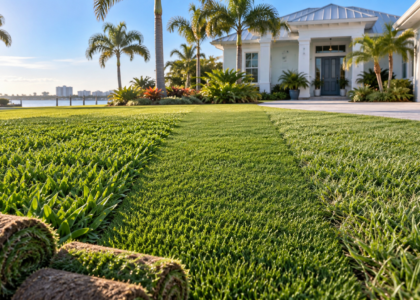
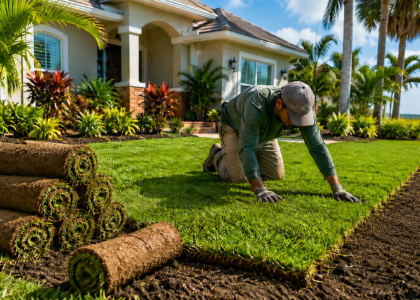
Consider sod when the existing lawn has large worn sections or when the landscape layout changes.
Before installing sod, the team should review:
- Drainage
- Irrigation coverage
- Soil condition
- Property grade
- Sun exposure
- Tree roots
- The intended use of the lawn
Do not lay new sod over a low area or unresolved drainage problem.
First, the crew may need to clear and grade the soil. They should also test irrigation coverage across the full lawn area.
CDS Landscaping sod projects require at least 1,000 square feet and have a $1,500 labor minimum.
Mulch and Landscape Bed Finishing
Mulch may be added after plants and irrigation adjustments are complete.
Before adding mulch, clear the beds of loose leaves, debris, and excess old material.
Mulch installation may include:
- Preparing bed edges
- Raking the soil surface
- Removing extra old mulch
- Keeping material away from plant stems
- Creating a consistent depth
- Covering exposed soil
Do not pile mulch against tree trunks or plant bases.
Also avoid covering drainage problems, irrigation parts, or thick layers of old debris with mulch.
The same mulch or decorative material may be used across connected planting beds to create a more consistent appearance.
Paver Patios and Walkways
A larger landscape installation may also include hardscape.
CDS Landscaping installs features such as:
- Paver patios
- Paver walkways
- Stepping-stone paths
- Brick edging
- Retaining walls
- Fire pits
These features generally require excavation, base preparation, compaction, grading, and edge work.
Hardscape is often installed before plants and sod because the work may involve heavy materials, digging, cutting, and equipment access.
The patio or walkway can then help define the final shapes of the planting beds and lawn.
Paver projects have a 100-square-foot minimum and a $2,500 minimum.
Retaining Walls
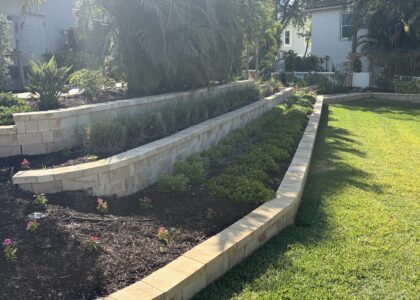
A retaining wall may help when the yard has a change in elevation or soil needs support.
The wall may be used to:
- Hold soil along a slope
- Create a raised planting bed
- Separate landscape levels
- Support an area near a patio
- Organize uneven ground
- Create a defined transition between spaces
Retaining walls need a stable base and a plan for water behind the wall.
Drainage may include rock, perforated pipe, filter material, catch basins, or another outlet depending on the property.
Retaining wall projects generally have a $2,500 labor minimum.
New Fence Installation
A landscape project may also include a new fence.
CDS Landscaping installs:
- Vinyl fencing
- Aluminum fencing
- Wood fencing
- Fence planning should account for:
- Property lines
- Gate locations
- Changes in grade
- Drainage paths
- Trees and roots
- Irrigation
- Landscape beds
- Access for equipment
The company completes new fence installations only and requires a minimum of five panels.
Plan the fence before installing nearby plants. This gives beds enough room for mature growth and future access.
Landscape Lighting
Lighting may be added to selected areas after the main landscape layout is established.
Possible lighting locations include:
- Walkways
- Patios
- Selected trees or palms
- Planting beds
- Steps
- Retaining walls
- Fence gates
- Entrances
The goal should be to place fixtures where they support the use and appearance of the property without creating excessive glare.
Wiring routes are easier to plan before the final mulch and bed finishing are completed.
Also place lights where growing plants will not quickly block them.
Final Cleanup and Walkthrough
The installation should finish with cleanup and a review of the completed work.
Final work may include:
- Removing unused materials
- Hauling away landscape debris
- Cleaning patios and walkways
- Raking disturbed soil
- Adjusting mulch
- Testing irrigation
- Reviewing drainage components
- Making small plant adjustments
The final walkthrough gives the homeowner an opportunity to review the completed scope and ask questions.
The team may explain:
- Plant watering
- Irrigation settings
- Sod care
- Drain locations
- Lighting controls
- Plant warranty details
- General maintenance needs
The homeowner should understand which parts of the property need attention during the first several weeks after installation.
How Much Does Landscape Installation Cost?
Landscape installation costs depend on the size and condition of the yard, plant selection, removal work, materials, drainage, irrigation, sod, and hardscape.
CDS Landscaping design and installation projects generally begin between $4,000 and $5,000 in labor, excluding materials.
After you share photos and basic project details, the team can discuss a preliminary budget. An onsite evaluation is then needed to develop the full scope and final quote.
A realistic budget should include site preparation as well as the visible plants and materials.
Plan a Landscape Installation With CDS Landscaping
A professional landscape installation brings together planning, preparation, plants, drainage, irrigation, sod, hardscape, lighting, and cleanup.
Not every property needs every service. Base the installation on the condition of the yard, your priorities, and how you will use the space.
CDS Landscaping provides landscape design and installation in St. Petersburg, Seminole, Largo, Pinellas Park, Clearwater, and surrounding areas.
Contact CDS Landscaping to share photos of your project, discuss a preliminary budget, and schedule an onsite property evaluation.