Fences and retaining walls can both shape the layout of a property, but they are not used for the same purpose.
A fence usually creates a boundary, adds privacy, controls access, or separates one outdoor area from another. A retaining wall holds soil at different elevations and may help organize a slope, raised planting area, patio, or walkway.
Some properties need only one of these features. Others may benefit from both. The right choice depends on the layout of the yard, the problem being addressed, and how the outdoor space will be used.
Understanding the differences can help homeowners plan a project that fits the property instead of choosing a feature based only on appearance.
What Is the Main Purpose of a Fence?
A fence creates a defined vertical boundary.
Homeowners may install a new fence to:
- Create more privacy
- Mark part of the property
- Separate the front and backyard
- Control access through gates
- Enclose a pool area
- Define a pet area
- Create separation from a neighboring property
- Add a finished border around the landscape
The fence material, height, style, and gate placement should be selected based on the intended use.
A privacy fence has different goals than an open aluminum fence. A pool fence may also need to follow requirements that do not apply to a general backyard boundary.
The property should be reviewed before choosing the final layout.
What Is the Main Purpose of a Retaining Wall?
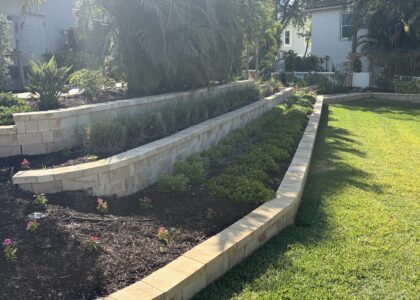
A retaining wall supports soil where the ground changes elevation.
It may be used to:
- Hold soil along a slope
- Create a raised planting bed
- Separate two landscape levels
- Support the edge of a patio
- Define an uneven part of the yard
- Create terraces on a larger slope
- Organize soil around a walkway
Retaining walls need more than an attractive surface material. They must be planned around soil pressure, wall height, drainage, base preparation, and the features located above and below the wall.
A short decorative border is different from a wall holding back a large amount of soil. The construction method should match the purpose of the wall.
When a Fence May Be the Better Choice
A fence is usually the better option when the main goal is privacy, separation, or access control.
For example, a homeowner may want to block a direct view into the backyard, define a side yard, or create a gate between the driveway and patio.
A fence may also help organize the landscape by creating a clear background for planting beds. Shrubs, palms, and other plants can then be arranged in front of the fence as part of the overall design.
Before installing a fence, consider:
- The intended level of privacy
- The view from inside the yard
- Gate locations
- Property lines
- Homeowners association requirements
- Local permit requirements
- Existing trees and roots
- Irrigation lines
- Drainage routes
- Changes in grade
The fence line should not be planned without looking at these conditions.
When a Retaining Wall May Be the Better Choice
A retaining wall may be needed when soil must be supported at two different levels.
For example, a patio may sit below a raised landscape bed. A sloped yard may need a defined transition between an upper and lower area. A walkway may also need support beside an elevated section of soil.
A retaining wall may be appropriate when:
- Soil repeatedly moves down a slope
- A raised bed needs a defined edge
- A patio is being built near a grade change
- The property needs several landscape levels
- A slope limits how part of the yard can be used
- A walkway passes beside higher ground
The wall should be planned as part of the grade and drainage system. It should not be treated as a decorative row of blocks placed in front of a slope.
Can a Fence and Retaining Wall Be Used Together?
Yes. Some properties need both a retaining wall and a fence.
A retaining wall may manage a change in elevation, while a fence above or near it creates privacy or a boundary.
However, combining the two features requires careful planning.
The design should consider:
- The height of the retaining wall
- The height of the fence
- The distance between the wall and fence
- Soil pressure
- Fence post locations
- Drainage behind the wall
- Property lines
- The weight placed near the upper edge
- Access for construction
- Maintenance space
Fence posts should not be placed without considering how they may affect the wall or the soil behind it.
If a fence is planned near a retaining wall, both features should be included in the same site review whenever possible.
Choosing a Fence Material
CDS Landscaping installs new vinyl, aluminum, and wood fences.
Each material creates a different appearance and level of visibility.
Vinyl Fencing
Vinyl fencing is commonly selected when privacy is a main concern.
Solid panels can block direct views into the yard and create a clean boundary. Vinyl is available in different colors and styles, though the available options may depend on the manufacturer and project.
Before choosing vinyl, consider:
- The desired fence height
- Gate locations
- Changes in grade
- Wind exposure
- The style of the home
- Nearby plants
- Available space along the fence line
Dense plants should not be installed so close that they press against the panels as they mature.
Aluminum Fencing
Aluminum fencing creates a more open appearance.
It may work well around front yards, pools, gardens, or properties where the homeowner wants a boundary without blocking the view.
Because aluminum fencing is open, it does not provide the same level of privacy as a solid vinyl or wood fence.
The layout should account for:
- Gate placement
- Pool requirements when applicable
- Ground clearance
- Changes in grade
- Landscape beds
- Visibility through the fence
The surrounding plants can be used to soften the fence without covering it completely.
Wood Fencing
Wood fencing can create privacy and a more traditional appearance.
CDS Landscaping commonly installs board-on-board panels with six-inch pickets. The layout and final appearance may vary based on the property and selected materials.
Wood fencing should be planned around:
- Soil contact
- Irrigation spray
- Nearby plants
- Gate locations
- Changes in grade
- Access for future maintenance
Plants and irrigation should not keep the fence constantly wet.
CDS Landscaping provides new fence installation only. The company does not offer fence repair services and requires a minimum of five panels.
Choosing Retaining Wall Materials
Retaining wall materials should be selected based on the project conditions as well as appearance.
Possible materials may include:
- Manufactured retaining wall blocks
- Brick
- Natural stone
- Wood
The material should relate to the home and other hardscape features, including patios, walkways, and edging.
Manufactured blocks are available in different colors, sizes, and textures. Brick may fit traditional properties or existing brick details. Natural stone can create a less uniform garden appearance.
Wood may be considered for certain wall projects, depending on the site and wall purpose.
The material alone does not determine whether the wall is appropriate. Height, base preparation, drainage, soil conditions, and construction method are also important.
Drainage Is Critical for Retaining Walls
Water can increase pressure in the soil behind a retaining wall.
A drainage system gives water a way to move instead of remaining trapped behind the structure.
Depending on the project, retaining wall drainage may include:
- Drainage rock
- Perforated pipe
- Filter fabric
- Catch basins
- Rock beds
- A planned outlet
The system should be based on where the water comes from and where it can be directed.
Heavy rain, roof runoff, irrigation, patios, and surrounding slopes may all contribute water to the area.
Drainage should be planned before the wall is installed. Trying to add it after construction may require disturbing the wall and nearby landscaping.
Drainage Also Matters Around Fences
Fences do not hold back soil in the same way retaining walls do, but drainage still affects fence planning.
Water may collect along a fence line because of:
- Low grading
- Roof runoff
- Irrigation overspray
- Neighboring properties
- Landscape beds
- Patios or walkways
- Soil placed against the fence
A solid fence may also affect airflow and how quickly wet areas dry.
The fence should not block a natural drainage path without another solution in place. Soil should not be piled against fence panels in an attempt to hold back a slope.
If soil needs structural support, a retaining wall may be more appropriate.
Plan Around Property Lines
Property lines should be identified before fence or retaining wall installation.
A homeowner should not rely only on the location of an older fence, hedge, or landscape bed to determine the boundary.
The project may need to account for:
- A property survey
- Utility easements
- Drainage easements
- Local setback rules
- Homeowners association requirements
- Neighboring structures
- Access for maintenance
- Permit requirements
These details may affect the location and height of the feature.
A retaining wall near a property line should also be reviewed carefully because changes in grading and water movement may affect surrounding areas.
Think About Gates and Access
Fence planning should include more than the panel layout.
Gates need enough width and clear space for normal use. Consider whether the opening will be used for:
- People
- Lawn equipment
- Trash containers
- Garden carts
- Wheelbarrows
- Pool equipment
- Larger maintenance access
A gate placed on a slope may be harder to operate. The ground surface should also allow the gate to open without dragging.
Plants, retaining walls, and lighting fixtures should not block the gate or reduce the usable width.
Connect the Features to the Landscape
A fence or retaining wall should fit the entire yard.
Landscape beds can soften the appearance of a fence, while plants above or below a retaining wall can help connect it with the surrounding property.
However, plant placement should account for mature size.
Avoid installing plants where they will:
- Grow across gates
- Press against fence panels
- Cover the top of a wall
- Block walking routes
- Interfere with drainage
- Hide maintenance access
- Damage visibility near entrances
The landscape should complement the structure without making it harder to use or maintain.
Consider Lighting
Landscape lighting may be used near fences, walls, gates, walkways, and planting beds.
Lighting can highlight selected features and make frequently used routes easier to see after dark.
Possible locations include:
- Fence gates
- Walkways beside a fence
- Steps near a retaining wall
- Planting beds above a wall
- Patios next to a wall
- Entrances between outdoor areas
Fixtures should not be placed where they narrow a route or interfere with gates.
Wiring is usually easier to install before the surrounding beds and mulch are completed.
Understand the Installation Order
When fences and retaining walls are part of a larger renovation, the order of work matters.
A typical project may include:
- Clearing unwanted plants and debris
- Confirming the layout
- Completing excavation
- Installing drainage
- Building the retaining wall
- Completing grading
- Installing the fence
- Adding patios or walkways
- Updating irrigation
- Installing plants and sod
- Adding lighting and mulch
The exact order depends on the property.
Underground work, grading, and wall construction should usually be completed before new plants or sod are installed nearby.
How Much Does a Retaining Wall Cost?
Retaining wall pricing depends on:
- Linear footage
- Wall height
- Material
- Excavation
- Base preparation
- Drainage requirements
- Site access
- Curves and corners
- Removal of existing materials
CDS Landscaping retaining wall pricing begins at approximately $40 per linear foot. Retaining wall projects generally have a $2,500 labor minimum.
An onsite evaluation is needed to confirm the final scope and price.
Planning a New Fence Project
Fence pricing depends on the selected material, number of panels, gates, preparation, access, and changes in grade.
The project may also require clearing plants, removing obstacles, or preparing the fence line.
CDS Landscaping provides all-inclusive quotes based on the required preparation and selected materials.
The company handles new installations only, with a minimum of five panels. Available fence materials include vinyl, aluminum, and wood.
Choose the Right Feature for Your Yard
A fence is usually selected for privacy, boundaries, access control, or separation. A retaining wall is built to support soil and manage changes in elevation.
Some properties may need both, but the features should be planned together when they are installed close to each other.
CDS Landscaping provides new fence installation and retaining wall installation in St. Petersburg, Seminole, Largo, Pinellas Park, Clearwater, and surrounding areas.
Contact CDS Landscaping to schedule an onsite evaluation and determine whether your property needs a fence, retaining wall, or a coordinated plan that includes both.