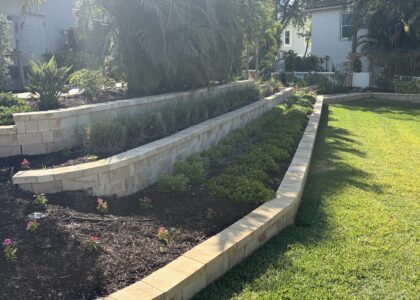
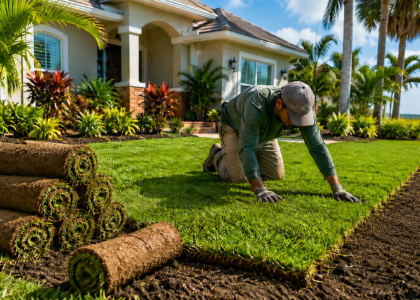
An should do more than turn sprinklers on at a set time. It needs to deliver suitable coverage to the lawn and planting beds without repeatedly watering driveways, patios, fences, or other areas that do not need it.
Florida landscapes often include turf, palms, shrubs, sunny planting beds, shaded areas, and sandy soil on the same property. These areas may not need the same amount of water or the same watering schedule.
That is why irrigation system design begins with the property itself. Plan the system around the size of the yard, plant layout, sunlight, water pressure, existing hardscape, drainage, and future landscape changes.
Here is what homeowners should understand about irrigation system design and installation.
Start With a Property Evaluation
Before installing pipes or sprinkler heads, the installer should review the entire yard.
The evaluation may include:
- The size and shape of the property
- Existing lawn and planting beds
- Daily sunlight and shade
- Soil conditions
- Patios, walkways, and driveways
- Fences and gates
- Trees and root systems
- Drainage concerns
- Downspouts and roof runoff
- Available water supply
- Existing irrigation components
- Future landscape plans
The homeowner should also explain which areas are dry, which remain wet, and whether you plan to change the landscape soon.
A new patio, lawn, or planting bed may change your watering needs. When possible, plan irrigation as part of the larger landscape project.
Map the Sprinkler Head Locations
Place sprinkler heads to suit the size, shape, and needs of each area.
The goal is to provide useful coverage without leaving large dry gaps or sending too much water into one section.
When placing heads, consider:
- Property boundaries
- Walkway and driveway edges
- Planting bed shapes
- Trees and shrubs
- Changes in elevation
- Available water pressure
- Spray distance
- Wind exposure
- The location of buildings and fences
Sprinkler heads need enough overlap to cover the intended area. However, adding more heads is not always the answer. Too many heads on one zone may reduce pressure and affect how the entire section operates.
The final layout should balance coverage with the available water supply.
Separate Lawn and Planting Areas
Turf and landscape plants often need different watering patterns.
A large open lawn may be covered with rotary nozzles, while a planting bed may need a different layout that provides water around shrubs and other plants.
Combining every area into one zone may create problems. The lawn may need a longer run time than a shaded planting bed. A sunny bed may dry more quickly than plants near the house.
When practical, the system should separate areas based on:
- Plant type
- Sun exposure
- Soil moisture
- Turf coverage
- Planting bed layout
- Slope
- Drainage
As a result, you can adjust watering for each section instead of using one setting across the yard.
Consider Sun and Shade
Sun exposure affects how quickly the soil and plants lose moisture.
A lawn area that receives direct afternoon sun may dry more quickly than a shaded side yard. A bed beneath mature trees may also receive less rainfall because the canopy blocks part of the water.
Sprinkler zones should account for these differences.
A shaded area should not automatically run for the same length of time as a sunny section. Too much water may leave the soil wet, while too little water may leave a sunny lawn struggling.
Sun and shade patterns may also change as trees and shrubs grow. Therefore, adjust the system as the property changes.
Plan Around Mature Plant Growth
A sprinkler head that works well during installation may become blocked as plants mature.
Shrubs can grow into spray patterns. Ground cover may surround sprinkler heads. Palms and larger plants may redirect water away from nearby areas.
The irrigation design should consider the mature size of the plants, not only their size on installation day.
Heads should remain accessible for adjustments and repairs. Avoid locations where roots, dense shrubs, or hardscape will block future access.
New landscape installations should also provide enough spacing between plants and irrigation components.
Review Water Pressure and Zone Capacity
Every irrigation system depends on the available water pressure and flow.
A zone with too many sprinkler heads may not operate correctly. Heads may fail to rise fully, spray distances may shrink, and parts of the zone may receive uneven coverage.
During planning, the system should account for:
- The number of heads on each zone
- The nozzle type
- The expected spray distance
- The water source
- Available pressure
- Pipe size
- Elevation changes
- The length of each pipe route
The design may need more zones when a larger property cannot support every sprinkler head at once.
Plan the system around the actual water supply instead of assuming that any number of heads can operate together.
Choose the Right Sprinkler Heads
Different sprinkler heads and nozzles serve different purposes.
CDS Landscaping uses six-inch pop-up sprinkler heads with rotary nozzles for its new irrigation installations. These heads rise above the surrounding turf or planting area while the zone is operating and lower when the watering cycle ends.
The nozzle and spray pattern should fit the space.
A wide lawn may need a different spray distance than a narrow side yard. Plan corners, curved beds, and small sections carefully so water does not repeatedly spray walls or pavement.
Head height also matters. A sprinkler installed too low may be blocked by grass, while one installed too high may be more exposed to lawn equipment or foot traffic.
Design Irrigation for Planting Beds
Include planting beds in the irrigation plan.
New plants may require regular watering while they become established. Mature plants may also need supplemental watering during dry periods.
Bed irrigation should consider:
- Plant spacing
- Root areas
- Sunlight
- Mulch depth
- Soil drainage
- Plant water needs
- Mature plant size
- Nearby sprinkler coverage
Water should reach the intended plants without constantly soaking walkways, patios, or fence panels.
The irrigation layout should also remain accessible beneath or around the mulch so the crew can repair and adjust it later.
Install Pipes Before Finished Landscaping
New irrigation systems require underground piping.
The installation process normally involves marking the planned routes, digging trenches, installing pipe, connecting valves and sprinkler heads, and backfilling the disturbed areas.
Whenever possible, irrigation installation should occur before:
- New sod
- Finished planting beds
- Mulch
- Paver walkways
- Patios
- Landscape lighting
This reduces the need to disturb completed landscape work.
For a larger project, coordinate irrigation work with drainage, grading, hardscape, sod, and planting.
Keep Irrigation and Drainage Separate
Irrigation and drainage address different needs.
Irrigation delivers water to the landscape. Drainage removes excess water from areas where it collects.
An irrigation system should not be used to correct dry areas that are actually caused by poor soil, blocked sprinkler heads, or incorrect plant placement. Drainage should not be installed before checking whether a leaking irrigation component is causing the wet area.
Signs of a possible irrigation problem include:
- Wet soil during dry weather
- Water around a valve box
- A sprinkler head that continues leaking
- One zone with low pressure
- Water spraying a driveway or wall
- Plants blocking spray patterns
- One area receiving water from several heads
A full evaluation can help determine whether the property needs an irrigation adjustment, a repair, drainage work, or a combination of services.
Install and Program the Controller
The controller manages when each irrigation zone runs and how long it operates.
Base the schedule on the landscape, season, weather, and local watering rules.
The controller may need different settings for:
- Sunny turf
- Shaded turf
- Planting beds
- New sod
- New plants
- Recently renovated areas
After watching the system run, adjust the initial schedule as needed.
New sod and plants may require more frequent attention during establishment, but review the schedule as those areas become established.
Do not set the controller once and ignore it indefinitely. Seasonal changes, rainfall, plant growth, and landscape renovations may all affect the appropriate settings.
Test Every Zone
After installation, test each irrigation zone.
Testing may include checking:
- Whether every head rises correctly
- Spray direction
- Coverage overlap
- Water pressure
- Leaks
- Overspray
- Blocked heads
- Controller operation
- Valve performance
- Dry areas
- Water collecting in low spots
Then adjust sprinkler heads to match the intended coverage area.
Also watch the system after the soil settles and the crew finishes planting or laying sod. Then make any final adjustments.
Know When an Existing System Needs a Consultation
A property may not need a completely new irrigation system.
An existing system consultation may help when:
- Parts of the lawn remain dry
- Some areas receive too much water
- Planting beds were recently changed
- New sod was installed
- Sprinkler heads are blocked
- The system sprays hard surfaces
- Several zones have uneven pressure
- The yard has been renovated
CDS Landscaping offers irrigation consultations for $120. If the homeowner moves forward with the recommended project, the consultation cost is deducted from the final bill.
The evaluation may identify opportunities to use existing piping while changing sprinkler heads, zones, or coverage.
Larger Irrigation Repairs
CDS Landscaping completes larger irrigation repair projects rather than small individual service calls.
Repair work may involve:
- Replacing several damaged heads
- Correcting larger coverage problems
- Repairing broken underground pipes
- Addressing valve issues
- Updating part of the system
- Adjusting zones after landscape changes
The minimum price for irrigation repair projects is $1,000.
The exact scope depends on the condition of the system and the amount of work required.
Irrigation System Revamps
An irrigation revamp is intended for an older system that still has usable components but needs broader updates.
The project may include replacing older sprinkler heads with new six-inch pop-up heads, improving coverage, and adjusting the system around the current landscape.
A revamp may be appropriate after:
- A landscape renovation
- New sod installation
- Changes to planting beds
- Patio or walkway installation
- Years of plant growth
- Repeated sprinkler head problems
First, evaluate the existing pipes and zones. Then decide whether a revamp or new system makes more sense.
How Much Does a New Irrigation System Cost?
The cost of a new irrigation system depends on the size and shape of the yard, the number of zones, the amount of piping, water pressure, plant beds, turf areas, access, and project complexity.
Most new CDS Landscaping irrigation installations begin around $4,000 and increase based on the property and scope.
An onsite evaluation is needed to map the system and prepare a complete quote.
CDS Landscaping includes a one-year warranty on irrigation parts and labor.
Plan an Irrigation System With CDS Landscaping
A well-planned irrigation system should reflect the actual layout of the property.
Before installation, consider head placement, zones, pressure, lawn, and planting beds. Also account for sun, shade, drainage, and future plant growth.
CDS Landscaping provides irrigation system design and installation, existing-system consultations, larger irrigation repairs, and system revamps in St. Petersburg, Seminole, Largo, Pinellas Park, Clearwater, and surrounding areas.
Contact CDS Landscaping to schedule an irrigation evaluation and discuss whether your property needs a new system, improved coverage, larger repairs, or a complete revamp.