A garden can change considerably after several years of plant growth, storms, changing shade, and normal outdoor use. Shrubs that once fit neatly beneath windows may grow into the walkway. Small plants may disappear behind larger ones. Landscape beds may lose their original shape, and parts of the lawn may become worn or difficult to maintain.
These problems do not always require removing the entire landscape and starting over. A garden renovation can preserve healthy plants and useful features while updating the areas that no longer fit the property.
The right improvements depend on the condition of the yard, how the outdoor space is used, and which problems need attention first.
Here are practical garden renovation ideas for an overgrown, outdated, or difficult-to-maintain Florida landscape.
Begin With a Full Property Review
Before choosing new plants or materials, walk through the entire property and identify what is currently working.
Look at:
- Healthy plants worth keeping
- Shrubs that have outgrown their locations
- Bare or crowded landscape beds
- Areas with standing water
- Weak irrigation coverage
- Worn or patchy lawn areas
- Walkways that are difficult to use
- Patios or pavers that will remain
- Trees and palms that affect sunlight
- Sections that require frequent maintenance
It can be tempting to begin with the most visible planting bed. However, drainage, irrigation, access, and mature plant growth may affect several parts of the yard.
A full review helps prevent one improvement from creating a problem somewhere else.
Decide Which Plants Should Stay
A garden renovation does not mean every existing plant must be removed.
Mature palms, trees, shrubs, and ornamental plants may continue to fit the updated landscape. Keeping suitable plants can also help the renovated yard feel established.
A plant may be worth preserving when it is:
- Healthy
- Appropriate for the available sunlight
- Properly sized for its location
- Not blocking a window or walkway
- Compatible with the new layout
- Reasonably easy to maintain
A plant may need removal when it is unhealthy, repeatedly struggles, has outgrown the available space, or interferes with another important feature.
The decision should be based on the plant’s condition and mature size rather than simply whether it is currently green.
Remove Excess Growth and Debris
An overgrown yard may need a detailed cleanout before the new layout becomes clear.
Cleanout work may include:
- Removing unwanted plants
- Trimming overgrown shrubs
- Thinning selected plant material
- Clearing fallen leaves and branches
- Removing old or excessive mulch
- Raking out landscape beds
- Removing damaged edging
- Hauling away resulting debris
This work can reveal buried irrigation parts, bed borders, tree roots, low areas, and plants that are still useful.
It may also show that some parts of the yard need less renovation than originally expected.
CDS Landscaping provides larger landscape cleanouts and may use a cleanout as the first stage of a broader renovation.
Redesign Crowded Landscape Beds
Landscape beds often become crowded when plants are installed too close together or are allowed to grow beyond their intended spaces.
Renovating a crowded bed may involve:
- Removing selected plants
- Moving the bed edge
- Creating more space between shrubs
- Replacing large plants with smaller options
- Using repeated plant groupings
- Leaving open areas between features
- Creating clearer height layers
A useful bed may include lower plants near the front, medium shrubs in the center, and taller accent plants toward the back.
The layout should account for mature size. A bed may look somewhat open when first installed, but that space gives plants room to grow.
Avoid filling every empty area with another plant. Open mulch areas can make the bed easier to understand and maintain.
Simplify the Plant Selection
A yard with too many unrelated plant varieties can feel busy.
Using a smaller group of suitable plants throughout the landscape can create more consistency. Repeating foliage colors, leaf shapes, or plant groupings can also connect separate areas of the property.
Before selecting plants, consider:
- Daily sunlight
- Available shade
- Soil drainage
- Irrigation coverage
- Mature height and width
- Salt exposure in coastal areas
- Distance from walkways
- Distance from the house
- Maintenance needs
A plant should fit the conditions of its location instead of being selected only for its appearance at the nursery.
Simplifying the plant list does not mean the garden must look plain. Different heights, textures, and seasonal colors can still provide variety.
Create a Clearer Front Entrance
The front entrance is often a good place to focus a renovation.
Overgrown plants may hide the walkway, block windows, or make the entrance difficult to identify. A clearer design may include:
- Defined planting beds
- A visible walkway
- Plants that fit below windows
- Balanced plant groupings
- Open space around the front door
- Selected landscape lighting
- A simpler color palette
The goal is to guide attention toward the entrance without crowding the space.
Plants should not extend across the walkway or interfere with the door, house numbers, utility equipment, or access points.
Update an Underused Backyard
A backyard renovation should reflect how the household uses the property.
Some homeowners may want more open lawn. Others may prefer a patio, walking path, planting beds, or a defined area around a fire pit.
Possible backyard updates include:
- Removing unused planting beds
- Creating a clearer path from the house
- Adding a paver patio
- Installing stepping stones
- Creating a seating area
- Adding landscape lighting
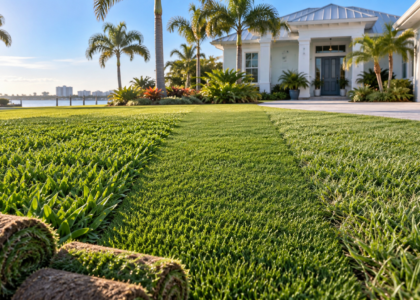
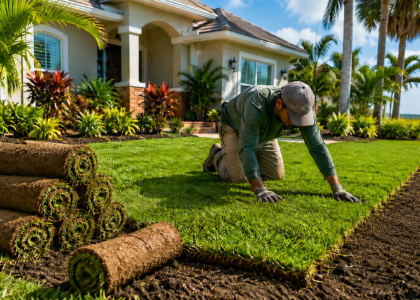
- Installing new sod
- Adding plants around an existing patio
- Creating space for children or pets
The layout should maintain access to gates, air-conditioning equipment, trash storage, and lawn maintenance areas.
Do not add features only because they are popular. Each part of the backyard should support a real use.
Reduce Difficult Lawn Areas
Grass may repeatedly struggle in narrow, shaded, wet, or heavily traveled areas.
Instead of replacing the same small section of sod again, consider whether another treatment would fit the location better.
Possible alternatives may include:
- Expanding a nearby landscape bed
- Adding a paver walkway
- Using stepping stones
- Creating a mulched planting area
- Adjusting the irrigation layout
- Correcting drainage before installing new turf
Open lawn can still be valuable for pets, children, walking, and visual space. The goal is to use sod where it can reasonably grow and where it serves a purpose.
CDS Landscaping requires a minimum of 1,000 square feet for sod installation and has a $1,500 labor minimum for sod projects.
Address Standing Water Before Planting
A garden renovation may reveal drainage problems that were hidden by overgrowth or worn lawn.
Signs of poor drainage may include:
- Standing water
- Soft or muddy soil
- Mulch washing out of beds
- Bare lawn areas
- Water collecting near the house
- Puddles near downspouts
- Runoff crossing walkways
New plants and sod should not be used to cover these problems.
Depending on the property, drainage work may include grading, catch basins, underground pipes, downspout connections, French drains, field drains, emitter drains, channel drains, or a sump pump system.
The correct solution depends on where the water comes from, where it collects, and where it can be directed.
Drainage installation should usually happen before the finished beds, plants, sod, or pavers are installed.
Update Irrigation Coverage
An older irrigation layout may not match the renovated garden.
Sprinkler heads may be blocked by mature shrubs. Lawn zones may now water expanded planting beds. Some areas may receive too much water while others remain dry.
An irrigation review may include:
- Checking sprinkler head locations
- Testing every zone
- Looking for leaks
- Reviewing water pressure
- Adjusting spray direction
- Moving blocked heads
- Separating lawn and planting areas
- Updating the watering schedule
- Planning for new sod or plants
Irrigation should be adjusted before the final planting and mulch are completed. This reduces the need to disturb the renovated areas later.
Add a Practical Walkway
Repeated foot traffic can create worn paths through grass and landscape beds.
A walkway can provide a clearer route between the driveway, entrance, patio, gate, side yard, or garden.
Possible options include:
- Paver walkways
- Stepping-stone paths
- Connections to an existing patio
The path should follow the route people naturally use. It also needs enough width for its intended purpose.
Consider whether people will carry trash containers, tools, or lawn equipment along the route.
Paver installation requires proper excavation, base preparation, grading, edging, and joint material. CDS Landscaping has a 100-square-foot minimum and a $2,500 minimum for paver projects.
Refresh an Existing Patio Area
A patio may remain part of the renovated landscape even when the surrounding yard needs significant work.
Renovation ideas around an existing patio may include:
- Redesigning nearby planting beds
- Removing plants that drop heavy debris
- Adding a walkway connection
- Adjusting drainage
- Updating irrigation
- Adding selected landscape lighting
- Creating more room around furniture
- Installing plants that fit the sunlight
The patio should feel connected to the surrounding landscape without becoming crowded.
Plants should be placed far enough away that mature growth will not cover the pavers or reduce the seating area.
Use Retaining Walls Where the Grade Changes
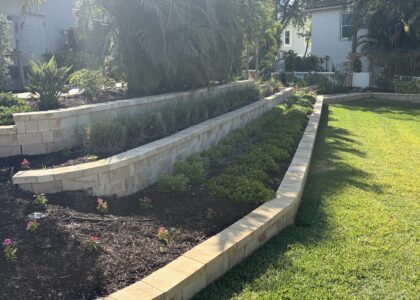
A retaining wall may help organize a slope, raised planting bed, patio edge, or area with a change in elevation.
A retaining wall can:
- Hold soil at different levels
- Create a raised garden area
- Define a slope
- Separate lawn and planting areas
- Support part of a patio layout
The wall needs a stable base and a drainage plan. Water trapped behind the wall can increase pressure in the soil.
Material, wall height, excavation, site access, and drainage requirements all affect the project.
Retaining wall pricing begins at approximately $40 per linear foot, and projects generally have a $2,500 labor minimum.
Add Lighting to Selected Features
Landscape lighting can be included near walkways, patios, entrances, trees, palms, gates, and retaining walls.
The lighting plan should support how the property is used after dark.
Possible locations include:
- Front walkways
- Patio edges
- Steps
- Selected planting beds
- Large palms or trees
- Fence gates
- Changes in elevation
Too many fixtures can make the yard feel harsh. A smaller number of carefully positioned lights may provide a more balanced result.
Lighting wires should usually be installed before the final mulch and bed finishing.
Consider New Fencing as Part of the Layout
A new fence may be included when a renovation needs greater privacy, a clearer boundary, or controlled access.
CDS Landscaping installs new:
- Vinyl fences
- Aluminum fences
- Wood fences
Fence planning should account for property lines, gates, drainage, irrigation, plants, trees, and changes in grade.
The company handles new fence installations only and requires a minimum of five panels.
Plants near the fence should have enough room to mature without pressing against panels or blocking gates.
Plan the Renovation in the Right Order
A garden renovation may include several services. Completing them in the correct order can reduce the need to disturb finished work.
A typical order may include:
- Remove unwanted plants and debris
- Complete grading
- Install drainage
- Update irrigation
- Build retaining walls
- Install pavers or walkways
- Install a new fence
- Prepare planting beds
- Install plants
- Install sod
- Add landscape lighting
- Apply mulch
- Complete final cleanup
The exact order depends on the property and scope.
Underground and structural work should generally happen before new plants, sod, and mulch.
Renovate the Yard in Phases When Needed
A full-property renovation may be completed at once or divided into phases.
For example:
- Phase one may address drainage, grading, and irrigation.
- Phase two may include patios, walkways, or retaining walls.
- Phase three may include plants, sod, lighting, and mulch.
A phased plan should still consider the final layout from the beginning. This helps keep future features from conflicting with completed work.
Homeowners should also identify which improvements are necessary and which ones are optional.
Create a Realistic Renovation Budget
Landscape renovation pricing depends on the size of the property, removal work, plants, materials, drainage, irrigation, sod, pavers, walls, lighting, and fencing.
CDS Landscaping design and installation projects generally begin between $4,000 and $5,000 in labor, excluding materials.
The final price is based on the property assessment, selected materials, and approved scope.
Homeowners can begin by sending photos and a description of the project. CDS Landscaping can then discuss a preliminary budget before arranging an onsite consultation.
Plan a Garden Renovation With CDS Landscaping
A garden renovation can preserve useful parts of the existing landscape while improving areas that have become overgrown, outdated, wet, bare, or difficult to maintain.
The project may include a cleanout, redesigned beds, new plants, drainage, irrigation, sod, pavers, retaining walls, lighting, or new fencing.
CDS Landscaping provides landscape renovation and restoration in St. Petersburg, Seminole, Largo, Pinellas Park, Clearwater, and surrounding areas.
Contact CDS Landscaping to share photos of your yard, discuss your renovation priorities, and schedule an onsite property evaluation.