Outdoor living spaces in St. Petersburg can serve you through much of the year. A well-planned patio, path, or backyard seating area makes time outside more comfortable.
However, creating a useful outdoor space involves more than placing furniture on an open section of the yard. Strong sunlight, heavy rain, drainage, plant growth, privacy, and maintenance all affect how well the area works.
A successful design should fit the property and the way the homeowner plans to use it. Some yards need a simple patio and walkway. Others may include a fire pit, landscape lighting, privacy planting, retaining walls, sod, or a new fence.
The following steps can help St. Petersburg homeowners plan an outdoor living area that works with local conditions.
Start With the Main Purpose of the Space
Before choosing pavers or plants, decide how you will use the area.
Possible uses include:
- Outdoor dining
- Grilling
- Relaxing
- Small family gatherings
- Larger social gatherings
- Sitting around a fire pit
- Connecting the house to the backyard
- Creating a clearer route to a gate
- Providing open space for children or pets
A patio designed for a small table and four chairs will have different space requirements than an area used for larger gatherings.
Avoid trying to fit every possible feature into the yard. A focused outdoor living space is often more useful than one crowded with too many separate elements.
Evaluate the Property Layout
Review the yard before choosing a location for the patio or seating area.
Important features may include:
- Doors and windows
- Existing walkways
- Air-conditioning equipment
- Trees and roots
- Irrigation components
- Downspouts
- Low or wet areas
- Fences and gates
- Property boundaries
- Pool decks
- Existing patios
- Frequently used walking routes
The outdoor living space should connect naturally with the house. A patio placed near a back door may be convenient for food, drinks, and furniture.
A patio farther into the yard may provide more separation, but it will usually need a clear walkway and additional lighting.
The layout should also maintain access to utility areas, trash storage, gates, and lawn equipment routes.
Plan Outdoor Living Spaces in St. Petersburg Around Sunlight
Sun exposure can affect how comfortable the space feels during the day.
A west-facing patio may receive strong afternoon sunlight. A patio on the east side may be more shaded later in the day. Existing trees, palms, fences, and nearby structures can also change the amount of sunlight throughout the year.
Before choosing the location, observe the yard at different times of day.
Consider:
- Morning sunlight
- Afternoon sunlight
- Existing shade
- Tree canopy growth
- The direction the house faces
- Nearby structures
- Where furniture will be placed
- How often the space will be used during daytime hours
Shade may come from the home, existing trees, or the surrounding landscape. New plants can also provide separation and filtered shade over time, but you should leave room for their mature size.
Choose a Patio Size Based on Furniture
Base patio dimensions on the space you need for furniture and walking.
A table and chairs need room for people to pull out the chairs and walk behind them. Lounge furniture may need more open space than expected. A grill should not block a doorway or primary walking route.
Before finalizing the patio size, identify the likely locations of:
Dining furniture
- Lounge chairs
- A grill
- Planters
- A fire pit
- Walking areas
Marking the proposed patio with stakes or outdoor marking paint can help show how much of the yard it will use.
A patio that looks large on paper may feel crowded once you add furniture. A patio that is too large may leave limited room for lawn, planting beds, or drainage.
CDS Landscaping requires a minimum of 100 square feet and a $2,500 minimum for paver projects.
Choose Pavers That Fit the Home
Paver color, texture, size, and pattern should relate to the home and surrounding property.
Look at:
- Exterior paint
- Roof color
- Existing brick or stone
- Walkways
- Pool decking
- Fence materials
- Retaining walls
- Landscape edging
The patio does not need to match every existing surface. However, the colors and materials should feel connected.
Large pavers may create a cleaner appearance. Smaller pavers may support more detailed patterns or fit a traditional design.
The selected material should also suit the intended use. Homeowners should consider how the surface feels underfoot, how much direct sunlight it receives, and how leaves or debris may appear against the color.
View paver samples outside whenever possible. Indoor lighting can change how the colors look.
Account for Heavy Rain
Drainage is a major part of outdoor living space planning in St. Petersburg.
Patios and walkways do not absorb water like lawn and planting beds. Rain moves across the surface, so the layout must guide it toward a suitable area.
Potential sources of water include:
- Roof runoff
- Downspouts
- Pool decks
- Driveways
- Neighboring properties
- Existing slopes
- Irrigation
- Nearby walkways
The installer should give the patio enough pitch to move water away from the house.
Avoid sending water into a low bed, against a fence, or toward an area that already stays wet.
Depending on the property, drainage improvements may include grading, catch basins, underground piping, downspout connections, French drains, channel drains, emitter drains, or a sump pump system.
Plan drainage before installing the patio, beds, plants, or sod.
Connect the Patio With Walkways
A clear walkway can make the outdoor living area easier to reach and use.
Possible connections include:
- The house to the patio
- The driveway to a side gate
- The patio to the lawn
- The patio to a fire pit
- The backyard to a storage area
- The patio to a pool deck
The path should follow the way people naturally move through the property.
Paver walkways can provide a continuous surface. Stepping stones may work in garden areas with lighter traffic.
The width should reflect how the path will be used. A route used for trash containers, tools, or lawn equipment may need more room than a decorative garden path.
Add a Fire Pit as a Separate Gathering Area
A fire pit can become a focal point in the backyard.
CDS Landscaping includes fire pits among its hardscape installation services. A fire pit may be surrounded by pavers or installed as a separate feature.
Review the location carefully.
Consider:
- Distance from the house
- Nearby trees
- Fence locations
- Planting beds
- Seating space
- Walking routes
- The surface around the fire pit
- How smoke may move through the yard
Check local rules and property restrictions before installation or use.
The space should provide enough room for people to sit and move without crowding plants, walls, or other features.
Create Privacy With Plants or Fencing
You can create privacy with plants, fencing, or both.
A planting screen may work when the bed has enough room for mature growth. A new fence may create a clearer boundary and more immediate separation.
When planning privacy plants, consider:
- Mature height
- Mature width
- Growth rate
- Irrigation
- Available sunlight
- Root space
- Leaf and flower drop
- Access for trimming
Keep plants far enough from patios, walkways, and fence panels to allow for growth.
CDS Landscaping installs new vinyl, aluminum, and wood fences with a five-panel minimum. Fence work is limited to new installation.
Before approving the fence layout, review gates, property lines, slopes, and drainage.
Use Landscape Lighting for Evening Use
Landscape lighting can help extend the use of an outdoor area after sunset.
Possible lighting locations include:
- Walkways
- Patio edges
- Steps
- Fence gates
- Selected trees or palms
- Retaining walls
- Planting beds
- Changes in elevation
Plan lighting around movement and visibility. A walkway may need clear lighting, while a planting bed may only need a small amount of accent light.
Too many fixtures can create glare. A smaller number of carefully placed lights may produce a more balanced effect.
Fixtures should not narrow the walkway or become obstacles. Also plan wiring routes before adding the final plants and mulch.
Use Plants to Connect the Patio to the Yard
Landscape beds can soften the edges of a patio and help it feel connected to the rest of the property.
Plants may be used to:
- Frame the patio
- Create privacy
- Add color
- Separate the patio from the lawn
- Guide attention toward an entrance
- Soften retaining walls
- Connect walkways and seating areas
Choose plants based on sunlight, drainage, irrigation, mature size, and upkeep.
Avoid placing small nursery plants too close to the patio. Shrubs may eventually cover pavers, narrow the seating area, or drop debris onto furniture.
Plants should have enough space to mature without requiring constant heavy trimming.
Review Irrigation Before Installation
A new patio or walkway may change the irrigation layout.
Sprinkler heads that once covered lawn may end up spraying the patio. A new planting bed may need different coverage. Existing heads may also be buried or blocked during construction.
Before installation, review:
- Sprinkler head locations
- Zone coverage
- New planting beds
- New sod areas
- Overspray
- Drainage
- Future plant growth
- Access for repairs
Complete irrigation changes before finishing the patio, sod, plants, and mulch.
This reduces the need to disturb completed work later.
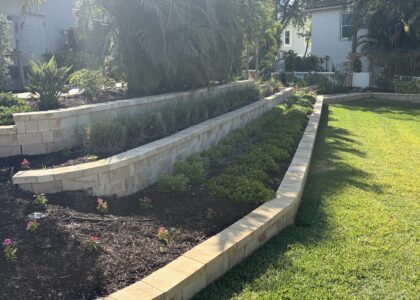
Consider a Retaining Wall for Sloped Areas
A retaining wall may help when the property contains a slope or a change in elevation near the outdoor living area.
A retaining wall may:
- Hold soil at a different elevation
- Create a raised planting bed
- Separate the patio from a slope
- Create tiers in the landscape
- Define the edge of an outdoor area
The wall requires a properly prepared base and a plan for drainage behind it.
Also consider water, soil pressure, wall height, and nearby structures. Review the features above and below the wall as well.
Retaining wall projects generally have a $2,500 labor minimum.
Keep Outdoor Living Spaces Easy to Maintain
Every outdoor living area requires some ongoing care.
Before approving the design, consider:
- How often plants will need trimming
- Whether trees will drop debris onto the patio
- How you will reach drains
- Whether irrigation heads remain reachable
- How you will move furniture
- Whether lawn equipment can reach the backyard
- How you will clean pavers
- Whether plant beds are too crowded
A design that is difficult to maintain may become frustrating over time.
Open access, suitable plant spacing, clear walkways, and visible drainage components can make routine care more manageable.
Plan the Work in the Right Order
Outdoor living projects may include several services.
A typical installation order may include:
- Clear unwanted plants and debris
- Complete excavation and grading
- Install drainage
- Update irrigation
- Build retaining walls
- Install the patio and walkways
- Install a new fence
- Prepare landscape beds
- Install plants
- Install sod
- Add landscape lighting
- Apply mulch
- Complete final cleanup
The exact order depends on the property.
Underground, drainage, and structural work should generally happen before plants, sod, and mulch.
Create a Realistic Project Budget
Outdoor living project costs depend on the size of the space, materials, access, excavation, drainage, irrigation, plants, sod, lighting, walls, fencing, and hardscape.
Homeowners should separate essential work from optional additions.
For example, the first phase may include grading, drainage, a patio, and walkway. Lighting, fencing, or expanded planting beds may be added during the same project or planned for a later phase.
The final budget should account for the work beneath the visible surface, including excavation, base preparation, drainage, and irrigation adjustments.
An onsite evaluation is needed before the complete scope and price can be confirmed.
Plan an Outdoor Living Space With CDS Landscaping
Outdoor living spaces in St. Petersburg should be planned around the property, local weather, and how the homeowner expects to use the yard.
Consider patio size, shade, paths, lighting, privacy, plants, irrigation, and upkeep together.
CDS Landscaping provides patio installation, hardscape installation, landscape design, landscape lighting, drainage, irrigation, sod installation, retaining walls, fire pits, and new fence installation in St. Petersburg, Seminole, Largo, Pinellas Park, Clearwater, and surrounding areas.
Contact CDS Landscaping to schedule an onsite evaluation and discuss an outdoor living space designed around your property.