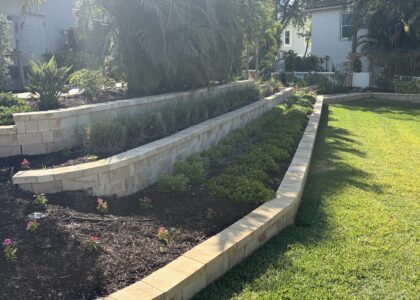
A healthy landscape depends on more than selecting attractive plants and installing new sod. Grass, shrubs, trees, and planting beds also need dependable watering that matches the conditions of the property.
In Florida, irrigation systems must account for strong sunlight, seasonal rain, sandy soil, shaded areas, different plant needs, and changing weather. A system that applies the same amount of water everywhere may leave some areas dry while keeping others too wet.
Professional irrigation system design organizes the property into watering zones and places sprinkler heads or other components where they can provide more appropriate coverage. The goal is to support the landscape without regularly spraying patios, driveways, fences, windows, or areas that do not need water.
Begin With the Landscape Plan
Irrigation planning should begin before new sod, plants, patios, or walkways are installed.
The contractor should understand where lawn areas, landscape beds, trees, hardscaping, and future outdoor features will be located. This makes it easier to place irrigation lines and heads without disturbing completed work later.
The plan should consider:
- Lawn dimensions
- Landscape bed locations
- Plant types
- Sun and shade
- Patios and walkways
- Driveways
- Fences and retaining walls
- Property slopes
- Drainage areas
- Outdoor lighting
- Existing trees and roots
- Future landscape improvements
Installing irrigation after the landscaping is finished may require new sod, mulch, pavers, or plants to be removed temporarily.
Separate Lawn Areas From Plant Beds
Grass and landscape plants may not need the same amount or type of watering.
Large lawn areas are often watered with spray or rotor heads that cover wider spaces. Planting beds may need more focused watering based on the plants, soil, and bed layout.
Combining lawns and planting beds in the same irrigation zone can make watering difficult. The system may apply enough water for the grass while keeping shrubs or flowers too wet. Reducing the watering time for the plants may then leave the lawn dry.
Separate irrigation zones allow different parts of the landscape to operate for different lengths of time.
The final design depends on the size of the property, available water pressure, plant needs, and local watering requirements.
Account for Sun and Shade
Two parts of the same yard may need different watering schedules.
Grass in full afternoon sun may dry faster than grass shaded by the home or mature trees. A shaded landscape bed may also remain moist longer after rain.
When sunny and shaded areas are connected to one zone, one section may receive too much or too little water.
The irrigation design should consider how sunlight moves across the property during the day. It should also account for seasonal changes in shade as plants grow or the angle of the sun changes.
Irrigation cannot correct every shade problem. Grass may continue struggling where it does not receive enough light, even when the soil receives regular water.
Choose Sprinkler Heads for the Area
Different irrigation components are intended for different spaces.
Spray heads may be used for smaller lawn areas and planting zones. Rotor heads may cover larger areas. Drip-style irrigation may provide more focused watering in selected landscape beds.
The right choice depends on:
- Area size
- Plant type
- Water pressure
- Available flow
- Wind exposure
- Soil conditions
- Slope
- Distance between heads
- Nearby pavement
The system should not mix components with very different application rates in the same zone unless the design specifically accounts for those differences.
For example, a rotor and a fixed spray head may not apply water at the same speed. Running them together can create uneven results.
Use Head-to-Head Coverage
Sprinkler heads should be positioned so neighboring spray patterns overlap appropriately.
A sprinkler that only reaches partway to the next head may leave dry areas between them. Adding more watering time may soak the areas near the heads without correcting the spaces that receive limited coverage.
Proper spacing helps create more consistent watering throughout the zone.
Coverage should also account for wind. A spray pattern that appears correct on a calm day may not reach the same area when wind is present.
The layout should be tested after installation so nozzles, direction, and distance can be adjusted.
Avoid Watering Hard Surfaces
Water that repeatedly sprays onto sidewalks, driveways, patios, fences, and exterior walls does not benefit the landscape.
Overspray may leave stains, create slippery areas, waste water, and keep nearby surfaces wet. It may also wash soil or mulch from landscape beds.
Sprinkler heads should be positioned and adjusted to keep water within the intended lawn or planting area as much as possible.
Narrow grass strips can be especially difficult to water. Standard sprinkler patterns may be too wide for these spaces. The design may require specialized nozzles, a different watering method, or a landscape change.
Check Available Water Pressure
An irrigation system must be designed around the property’s available water pressure and flow.
Too many sprinkler heads operating at once may reduce the distance and consistency of the spray. Heads may fail to rise completely, or sections at the end of the zone may receive limited water.
Dividing the property into properly sized zones helps the system work within the available capacity.
Pressure that is too high may also create problems. Water can mist into the air instead of reaching the soil effectively.
The system design should consider pressure, pipe size, zone demand, and the irrigation components being used.
Plan Around Slopes
Water behaves differently on sloped areas than it does on level ground.
Applying water too quickly may cause runoff before the soil can absorb it. Water may collect at the bottom of the slope while the upper area remains dry.
Sloped zones may need shorter watering periods with breaks between cycles. This approach gives the soil more time to absorb the water.
Sprinkler placement should also avoid directing large amounts of water downhill toward patios, walkways, neighboring properties, or retaining walls.
Irrigation and drainage should be planned together when the property contains significant changes in elevation.
Coordinate Irrigation With Drainage
An irrigation problem can sometimes look like poor yard drainage.
A leaking pipe, broken sprinkler head, or overwatered zone may create soggy grass, standing water, or washed-out soil even when it has not rained.
Drainage improvements alone will not correct excess water coming from the irrigation system.
Before installing drainage, run each irrigation zone and look for:
- Leaking heads
- Water bubbling from the soil
- Broken pipes
- Heads that remain wet after the zone stops
- Excess water near patios
- Repeated puddles in one area
- Overspray from nearby zones
A complete landscape plan should consider both how water is applied and how excess rainwater leaves the property.
Prepare Irrigation Before Sod Installation
New sod needs consistent moisture during the early establishment period.
Before the sod arrives, the irrigation system should be tested and adjusted. Dry spaces, leaks, and blocked spray patterns are easier to correct before the lawn is completed.
The system should provide suitable coverage across the entire sod area without flooding low spots.
After installation, the watering schedule may need temporary changes while the roots begin growing into the prepared soil.
The schedule should then be adjusted as the sod becomes established. Continuing an early watering schedule for too long may keep the soil wetter than necessary.
Weather and rainfall should also be considered. The system may need to remain off after heavy storms.
Update Irrigation During Landscape Renovation
An irrigation system was often designed around the way a property looked when it was first installed.
Over time, homeowners may expand landscape beds, remove grass, install patios, replace shrubs, or add fences. Mature plants may also block heads that once watered the lawn correctly.
Landscape renovation provides an opportunity to update the irrigation layout.
Possible changes may include:
- Moving sprinkler heads
- Adding or removing zones
- Changing nozzles
- Converting lawn areas to bed irrigation
- Capping heads beneath patios
- Adjusting coverage around fences
- Replacing damaged valves
- Updating the controller
The irrigation system should support the new landscape rather than continuing to water areas that no longer exist.
Watch for Blocked Sprinkler Heads
Plants, grass, mulch, and soil may block sprinkler heads over time.
A head that cannot rise completely may spray only a small area. A shrub may also interrupt the pattern and prevent water from reaching the lawn behind it.
Blocked heads can lead homeowners to increase watering time, which may overwater the area closest to the sprinkler while the blocked section remains dry.
Sprinkler heads should remain visible enough for inspection and adjustment. Grass and plants may need to be trimmed away periodically.
Landscape beds should also be maintained so mulch does not bury the equipment.
Inspect the System for Leaks
Even small irrigation leaks can affect watering coverage and create wet areas.
Signs may include:
- Unusually soft soil
- Water running when the system is off
- One head with weak pressure
- Water bubbling around a valve box
- A sudden wet area
- Erosion near a sprinkler
- Higher-than-expected water use
- Puddles forming during one zone
Leaks should be evaluated before increasing the watering schedule.
A zone with reduced pressure may have a broken line, damaged head, valve concern, or too many components operating at once.
Adjust Watering for Rainy and Dry Periods
Florida watering needs change throughout the year.
During rainy periods, regularly scheduled irrigation may apply water when the soil is already wet. During extended dry conditions, some areas may need closer monitoring.
The system should not run on the same schedule without regard for current weather.
Homeowners should observe the landscape and adjust watering within local rules. A rain shutoff device or weather-based controller may help prevent unnecessary operation after rainfall, depending on the system.
Seasonal adjustment does not mean making large changes without checking the soil and plants. Too much water can be as damaging as too little.
Water at an Appropriate Time
Watering time can affect how much water reaches the soil.
Midday watering may lose more water to heat and wind. Evening watering can leave some plant surfaces wet for an extended period.
Early morning is commonly used because temperatures are generally lower and the landscape has time to dry during the day.
The correct schedule depends on local watering restrictions, the irrigation system, weather, soil, and plants.
Homeowners should confirm the watering days and times allowed for their location rather than assuming one schedule applies everywhere.
Avoid Assuming More Water Is Better
Yellow grass or declining plants do not always need additional irrigation.
Similar symptoms may be caused by:
- Excess water
- Poor drainage
- Insects
- Disease
- Shade
- Soil problems
- Nutrient concerns
- Root damage
- Improper plant placement
Increasing the schedule without identifying the cause may make the problem worse.
The soil should be checked before the watering time is changed. If the area remains wet, more irrigation is unlikely to help.
The irrigation system is one part of landscape health rather than a solution for every lawn or plant problem.
Check the Controller Settings
The irrigation controller determines which zones operate, how long they run, and when watering begins.
Settings should be reviewed after power outages, repairs, seasonal changes, and landscape renovations.
Check for:
- Correct date and time
- Appropriate watering days
- Reasonable zone run times
- Duplicate start times
- Programs that are no longer needed
- Rain delay settings
- Zones running more than once
A duplicate start time may cause the entire program to run several times in one day. This can lead to overwatering even when each individual zone appears to have a reasonable run time.
Keep the controller information organized so future changes are easier to understand.
Label Irrigation Zones
Knowing which part of the property each zone controls makes testing and adjustments easier.
Zone labels may identify areas such as:
- Front lawn
- Back lawn
- Side yard
- Front plant beds
- Back plant beds
- Driveway strip
- Patio landscaping
- New sod area
Clear labels help homeowners avoid changing the wrong section of the property.
They can also make it easier to explain a concern when requesting an upgrade or modification.
Know When an Upgrade May Be Helpful
An older irrigation system does not always need to be replaced completely.
Some systems may benefit from targeted improvements, such as updated nozzles, relocated heads, repaired valves, added zones, or a newer controller.
An upgrade may be worth considering when:
- The landscape layout has changed
- Coverage remains uneven
- Several components are damaged
- The controller is difficult to use
- The system waters hard surfaces
- Zones combine areas with different needs
- New sod or planting beds are being installed
- The available water pressure has changed
The right approach depends on the current system and the planned landscaping work.
Plan Irrigation With Long-Term Maintenance in Mind
Sprinkler heads, valves, and other components should remain accessible after the landscape is installed.
Placing equipment beneath dense shrubs, large roots, patios, or permanent structures can make future service more difficult.
The irrigation design should also allow reasonable adjustments as plants grow.
A newly planted shrub may be small enough for water to pass over it, but the same plant may block the spray pattern several years later.
Planning for mature plant size can reduce future conflicts between irrigation and landscaping.
Professional Irrigation System Design in St. Petersburg
A well-planned irrigation system can provide more consistent coverage for lawns and landscape beds while reducing unnecessary watering of patios, driveways, fences, and other hard surfaces.
The design should account for water pressure, sunlight, plant needs, soil, slopes, drainage, and future landscape growth.
CDS Landscaping provides irrigation system design, installation, upgrades, and modifications in St. Petersburg, Seminole, Largo, Pinellas Park, Clearwater, and surrounding Florida communities. Irrigation work may also be coordinated with sod installation, drainage, landscape design, renovation, and hardscaping.
Contact CDS Landscaping to request a quote and discuss an irrigation system designed around the needs of your property.