Florida homeowners have more opportunities to spend time outside than people in many other parts of the country. A comfortable patio and surrounding landscape can provide a place to relax, dine, entertain guests, or enjoy a quiet evening at home.
Creating an outdoor living space involves more than adding furniture to an empty patio. The layout should consider sunlight, rain, drainage, walkways, plants, lighting, irrigation, and how people will move between the house and yard.
A thoughtful design can make the space more practical during hot afternoons, rainy months, cooler evenings, and changing seasons.
Begin With the Purpose of the Space
Before choosing pavers, plants, or other materials, decide how the outdoor area will be used.
Some homeowners want a simple sitting area for two people. Others need space for family meals, grilling, entertaining, or watching children and pets play in the yard.
Common uses for an outdoor living space include:
- Outdoor dining
- Relaxing with family
- Entertaining guests
- Grilling and serving food
- Reading or working outside
- Container gardening
- Sitting near a pool
- Watching television or listening to music
The design should support the activities that will happen most often. A crowded patio with too many features may be less enjoyable than a simpler space with enough room to move comfortably.
Choose the Right Location
Many outdoor living spaces are installed directly behind the home because this provides convenient access to the kitchen and indoor living areas.
However, the best location depends on the property. A separate area farther into the yard may receive more shade, offer greater privacy, or provide a better view.
When comparing locations, consider:
- Doors and entry points
- Sunlight throughout the day
- Shade from the house or trees
- Views from inside the home
- Nearby property lines
- Drainage patterns
- Existing walkways
- Irrigation lines
- Trees and root systems
- Pool access
The location should feel connected to the home without interfering with other parts of the landscape.
Plan a Comfortable Patio Size
The patio should be large enough to support furniture and foot traffic without taking over the entire yard.
Measure tables, chairs, grills, storage containers, and other items before finalizing the patio dimensions. Dining chairs need room to slide back, and people need space to walk behind them.
Homeowners should also consider whether the patio will have separate areas for dining and relaxing. These zones do not need walls, but they may be defined through furniture placement, paver patterns, borders, or nearby plantings.
Marking the proposed patio size on the ground can help show how much lawn and landscaping will remain after installation.
Use Pavers to Define the Area
Pavers are a practical option for creating patios, walkways, and other hardscape surfaces.
They are available in different shapes, sizes, textures, and colors. This allows the patio to complement the home and surrounding landscape.
Paver patterns may include:
- Running bond
- Herringbone
- Basket weave
- Stacked layouts
- Random or modular patterns
A contrasting border can define the patio edge or distinguish one activity area from another.
Because pavers are installed as individual units, damaged or settled sections may be easier to address than a large poured surface. However, proper base preparation remains essential. Poor compaction, erosion, or drainage may cause pavers to become uneven.
Prepare for Florida Rain
Heavy rain can quickly affect an outdoor living space.
Water may collect on a patio, wash mulch out of nearby beds, create muddy lawn areas, or gather near the home. The patio should be graded so water moves away from the foundation and toward an appropriate drainage area.
The surrounding yard must also be evaluated. Downspouts, irrigation runoff, low areas, and neighboring elevations can all influence where water travels.
Drainage concerns should be addressed before pavers, plants, sod, or other finishing materials are installed. Otherwise, completed work may need to be removed later to correct the problem.
Possible drainage improvements depend on the property and may include grading, redirecting runoff, catch basins, drainage pipe, or another suitable solution.
Create Natural Walkways
An outdoor living area should be easy to reach from the house, driveway, pool, and other parts of the yard.
Walkways help guide movement and reduce worn paths through the grass. They can also keep guests from walking through landscape beds or muddy areas.
Paver walkways can connect the patio to side gates, garden areas, sheds, or outdoor storage.
The path should be wide enough for comfortable use and should avoid unnecessary sharp turns. Gates, doors, furniture, and equipment access should all be considered before the walkway is installed.
Plan for Sun and Shade
Florida sunlight can make an uncovered patio uncomfortable during parts of the day.
Before finalizing the layout, observe the area in the morning, afternoon, and evening. The sun’s position changes throughout the year, so a location that feels shaded during one season may receive more direct light during another.
Existing trees may provide useful shade, but roots, falling leaves, sap, and branches should be considered. Trees should not be damaged or surrounded by hardscaping without evaluating their long-term growth.
Patio umbrellas and other movable shade options can provide flexibility. The design should leave enough room to open and position them without blocking walkways.
Paver color may also affect comfort. Darker materials may absorb more heat than lighter surfaces. Reviewing physical samples can help homeowners compare appearance and texture.
Choose Plants That Support the Space
Plants can make an outdoor living area feel more comfortable and connected to the yard.
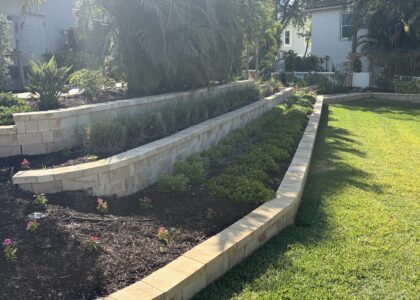
They may provide color, texture, privacy, or partial shade. Landscape beds can also soften the edges of a large patio and help the hardscape blend with the rest of the property.
Plant selection should consider:
- Mature height and width
- Sunlight requirements
- Water needs
- Distance from the patio
- Root growth
- Falling leaves or flowers
- Ongoing maintenance
Plants that grow too close to the patio may eventually block walking space. Thorny plants should be kept away from seating areas and narrow paths.
Shrubs may provide privacy, but they should be spaced according to their mature size. Installing them too close together may create heavy growth and frequent trimming needs.
Coordinate Irrigation With the Design
The irrigation system should support nearby plants and lawn areas without constantly spraying the patio, furniture, windows, or doors.
New landscape beds may require irrigation heads or zones to be adjusted. Existing heads may also become blocked as plants grow.
Irrigation planning should happen before the patio and surrounding landscape are completed. This reduces the need to disturb pavers, sod, or plant beds later.
The system should be tested for leaks, damaged heads, uneven coverage, and overspray. Different parts of the yard may require different watering schedules depending on the plants and amount of sunlight.
Add Landscape Lighting
Lighting allows an outdoor living space to remain useful after sunset.
Path lights can make walkways and steps easier to see. Accent lighting may highlight nearby trees, palms, walls, and landscape beds.
The goal is to provide enough light for movement and atmosphere without making the space feel overly bright.
Fixtures should be positioned so they do not shine directly into the home or neighboring properties. Plant growth should also be considered because leaves and branches may eventually block the light.
Wiring and fixture placement should be planned before major landscaping or hardscaping is completed.
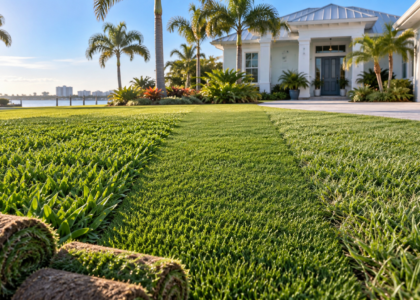
Use the Lawn as Part of the Layout
The lawn can serve as an extension of the outdoor living area.
Open grass may provide space for children, pets, lawn games, or additional seating during gatherings. It can also create visual separation between the patio and landscape beds.
However, grass may struggle in areas with heavy shade, poor drainage, or frequent foot traffic.
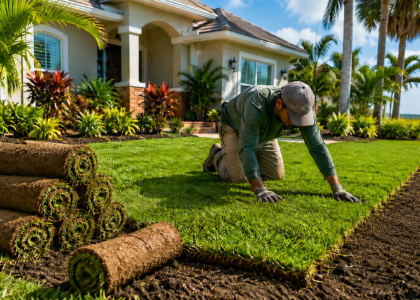
Before installing new sod, evaluate the sunlight, soil, grading, and irrigation. The underlying cause of damaged grass should be corrected before replacement.
The amount of lawn should fit the homeowner’s maintenance preferences. A successful outdoor design does not require grass to cover every open area.
Keep Maintenance Manageable
An outdoor living space should be designed around the amount of maintenance the homeowner is willing to perform.
Complex planting beds, fast-growing shrubs, and large lawn areas may require more care. A simpler layout with properly spaced plants and clear borders may be easier to manage.
Routine maintenance may include:
- Sweeping the patio
- Removing leaves and debris
- Cleaning pavers
- Managing weeds
- Trimming plants
- Replacing mulch
- Checking drainage openings
- Testing irrigation
- Inspecting landscape lighting
The patio should also be checked for settled or uneven areas. Drainage paths and catch basins should remain clear of mulch, roots, and leaves.
Plan for Changes Throughout the Year
The way an outdoor living space is used may change with the weather.
During warmer months, shade and airflow may be the main concerns. In cooler weather, homeowners may prefer areas that receive more sunlight.
Furniture can be arranged differently throughout the year. Umbrellas, cushions, and movable planters can also provide flexibility without permanently changing the layout.
Planting beds may be designed with a mixture of foliage, textures, and flowering periods so the property does not depend on one short season for color.
The goal is to create a space that remains practical even as temperatures, rainfall, and sunlight change.
Connect the Patio With the Entire Landscape
A patio should not look like an isolated surface placed in the middle of the yard.
The most successful outdoor living spaces connect patios, walkways, plants, lawn areas, lighting, irrigation, and drainage as parts of one plan.
For example, a walkway may lead from the house to the patio, while nearby plant beds provide privacy. Landscape lighting can guide guests through the area at night, and drainage can protect the hardscape during heavy rain.
Planning everything together can produce a more organized result and reduce the chance that one improvement will interfere with another.
Professional Outdoor Living Space Design in St. Petersburg
A year-round outdoor living space should be comfortable, practical, and suited to Florida conditions. Careful planning can help homeowners manage sunlight, rainfall, drainage, furniture, plants, lawn areas, and lighting.
CDS Landscaping provides landscape design, patio installation, pavers, landscape lighting, irrigation, drainage, sod installation, and landscape renovation in St. Petersburg, Seminole, Largo, and surrounding communities.
Contact CDS Landscaping to request a quote and begin planning an outdoor living space that fits your property and the way you want to use it.