Fences and retaining walls can both improve an outdoor space, but they perform very different jobs.
A fence can add privacy, define a property line, create separation between outdoor areas, or help contain children and pets. A retaining wall is generally used to hold soil, manage changes in elevation, reduce erosion, or create a more defined landscape bed.
For homeowners in St. Petersburg and surrounding communities, both features must be planned around Florida conditions. Heavy rain, sandy soil, strong sunlight, coastal air, drainage, and plant growth can all affect the material and installation method.
Understanding the purpose of each feature can help homeowners choose the right improvement for their property.
When a Fence May Be the Right Choice
A fence is often installed when a homeowner wants more privacy or a clearer boundary around part of the property.
It may separate a backyard from neighboring homes, create a defined pool area, or help organize the space around a patio or lawn. Fencing may also reduce unwanted foot traffic through the property and make an outdoor area feel more enclosed.
Common reasons for installing a new fence include:
- Creating backyard privacy
- Defining a property boundary
- Containing children or pets
- Separating a pool or patio area
- Reducing views from nearby properties
- Improving the appearance of an older yard
- Replacing an outdated fence with a new installation
The correct fence depends on the homeowner’s goals, property layout, neighborhood requirements, and preferred level of maintenance.
Choosing a Fence Material
CDS Landscaping installs new vinyl, aluminum, and wood fences. Each option offers a different appearance and level of privacy.
Vinyl Fencing
Vinyl is commonly selected for privacy fencing because solid panels can block views into the yard. It is available in different colors and styles and generally requires less routine upkeep than unfinished wood.
Vinyl does not require staining or painting, but it still needs occasional cleaning. Dirt, algae, grass clippings, and other outdoor material may collect on the surface in Florida’s humid climate.
The posts and gates require proper support because wind and frequent use place additional stress on these areas.
Aluminum Fencing
Aluminum fencing provides a more open appearance. It may be used around pools, front yards, gardens, and areas where the homeowner wants a visible boundary without completely blocking the view.
Aluminum is resistant to rust, which can make it practical for Florida properties. However, it does not provide the same level of privacy as a solid vinyl or wood fence.
The layout should be planned carefully around gates, walkways, driveways, irrigation equipment, and outdoor living areas.
Wood Fencing
Wood fencing creates a natural appearance and can provide substantial privacy.
Board-on-board wood panels may reduce gaps between the pickets and create a more complete visual barrier. However, wood is exposed to moisture, sunlight, insects, and weathering.
The fence may require cleaning, sealing, staining, or board replacement over time. Maintenance depends on the wood, installation, exposure, and surrounding landscape.
Plants and irrigation should be kept from placing constant moisture against the fence.
What to Check Before Fence Installation
Fence installation should not begin until several property details have been reviewed.
Property Lines
Homeowners should understand where their legal property boundaries are located. Existing grass lines, plants, or older fence sections may not accurately represent the property line.
A survey may be needed before the final fence layout is approved.
Local and HOA Requirements
Some neighborhoods and municipalities regulate fence height, placement, materials, colors, and setbacks.
Pool fencing may also need to meet specific safety requirements. These requirements should be reviewed before materials are ordered or installation begins.
Gates and Access
Gate placement should reflect how the yard is used.
A narrow gate may be suitable for foot traffic, while a wider opening may be needed for lawn equipment, trailers, or other large items. Gates should not interfere with driveways, patios, walkways, or drainage paths.
Underground Utilities and Irrigation
Fence posts require excavation. The layout should account for underground utilities, irrigation lines, drainage components, and landscape lighting wires.
Existing plants, stumps, and roots may also affect where posts can be placed.
CDS Landscaping provides new fence installation rather than fence repair. Fence projects have a five-panel minimum, so small single-panel repairs or isolated replacements may not qualify.
When a Retaining Wall May Be Needed
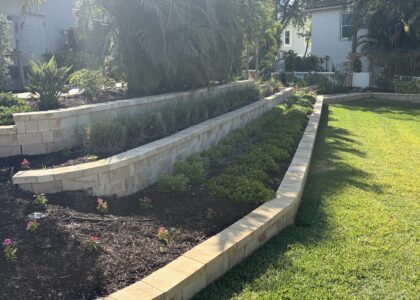
A retaining wall serves a structural landscape purpose. It is generally installed where soil needs to be held at different elevations.
Retaining walls may be useful on sloped properties, near patios, beside walkways, or around raised planting areas. They can also help define spaces and reduce the movement of soil during heavy rain.
A property may benefit from retaining wall installation when:
- Soil repeatedly washes into the lawn or walkway
- A slope is difficult to landscape or maintain
- A raised planting bed needs support
- Erosion is affecting part of the yard
- A patio needs a clearly defined edge
- Different elevations need to be separated
- A landscape bed is losing soil after rain
A retaining wall should not be treated as a decorative border when it is expected to support a large amount of soil. The height, location, soil pressure, base, and drainage all affect the design.
Why Drainage Matters Behind a Retaining Wall
Water pressure is one of the biggest concerns in retaining wall construction.
When water collects in the soil behind a wall, it adds weight and pressure. Over time, poor drainage can contribute to movement, leaning, cracking, or separation.
The installation may require compacted base material, drainage rock, catch basins, drainage pipe, or another method for directing water away from the wall.
The correct approach depends on the wall’s height, slope, soil, surrounding surfaces, and the amount of runoff entering the area.
Drainage should be planned before construction begins. Adding a wall without considering where the water will go may move the original problem to another part of the property.
Retaining Walls and Florida Rain
St. Petersburg landscapes may receive heavy rainfall within a short period. Water can quickly travel across patios, roofs, driveways, and compacted lawn areas.
A retaining wall should work with the property’s overall drainage plan. Downspouts, irrigation runoff, neighboring elevations, and paved surfaces may all affect the area.
A wall by itself does not automatically solve a drainage problem. In some cases, grading or additional drainage improvements may also be needed.
The property should be evaluated as a complete system rather than focusing only on the visible wall.
Selecting Retaining Wall Materials
Retaining walls can be built from different materials depending on the design, height, budget, and intended appearance.
Segmental concrete blocks are commonly used because they are available in different sizes, colors, and textures. They can complement paver patios, walkways, and other hardscape features.
Natural stone may create a more organic appearance, but the cost and installation process can vary.
The selected material should fit the home and surrounding landscape while being appropriate for the wall’s structural needs.
A decorative garden border and a wall holding back a steep slope do not require the same type of construction.
How Retaining Walls Improve Landscape Design
A retaining wall can serve a practical purpose while also making the yard look more organized.
It may create a defined transition between a patio and planting bed, separate a sloped lawn into levels, or provide a finished edge around an elevated area.
Walls can also be coordinated with:
- Paver patios
- Walkways
- Landscape beds
- Outdoor seating areas
- Drainage improvements
- Sod installation
- Landscape lighting
Plant selection should account for the wall’s height and drainage. Large roots, heavy shrubs, and plants requiring constant watering may not be appropriate directly behind every wall.
Fence or Retaining Wall: Which Does Your Yard Need?
Some homeowners use the terms interchangeably, but fences and retaining walls solve different problems.
Choose a fence when the main goal is privacy, safety, separation, or boundary definition.
Consider a retaining wall when the concern involves soil, erosion, slope, elevation, or support for a raised landscape area.
Some projects may benefit from both. A retaining wall may manage a change in grade, while a fence installed nearby provides privacy or separation.
When both features are planned together, the layout should account for post placement, drainage, gates, wall height, and access for maintenance.
Planning Around the Rest of the Landscape
Neither a fence nor a retaining wall should be planned separately from the surrounding yard.
The project should consider:
- Existing trees and roots
- Irrigation lines and spray patterns
- Landscape lighting wires
- Drainage routes
- Patios and walkways
- Lawn equipment access
- Plant mature sizes
- Doors and gates
- Neighboring properties
A fence installed too close to shrubs may become difficult to clean or maintain. A retaining wall placed without considering irrigation may receive more water than intended.
Reviewing these details early can prevent conflicts after construction is complete.
Maintenance After Installation
Fences and retaining walls require different forms of care.
Vinyl and aluminum fences may need occasional washing. Wood fences may require more regular inspection and surface treatment.
Plants should be trimmed so they do not place constant pressure or moisture against the fence.
Retaining walls should be checked for soil loss, settlement, leaning, loose blocks, and drainage problems. Drainage openings and nearby catch basins should remain free of leaves, mulch, roots, and other debris.
Small changes should be evaluated before they become larger concerns.
Professional Fence and Retaining Wall Installation
A fence can make a yard feel more private and defined. A retaining wall can manage soil, elevation, and erosion while supporting the surrounding landscape.
Both projects depend on careful planning, suitable materials, and proper site preparation.
CDS Landscaping provides new fence installation and retaining wall installation in St. Petersburg, Seminole, Largo, and surrounding areas. Fence options include vinyl, aluminum, and wood. The company also provides hardscape, drainage, irrigation, landscape renovation, and related services that may be coordinated with the project.
Contact CDS Landscaping to request a quote and discuss the right fence or retaining wall solution for your property.