Rain is a normal part of life in St. Petersburg, but water should not remain trapped throughout your yard long after a storm has passed.
Poor drainage can leave grass soggy, wash soil out of landscape beds, move mulch, damage plants, and make patios or walkways harder to use. Over time, repeated water problems may also affect sod, pavers, retaining walls, and other landscape features.
Some drainage problems are easy to recognize. Others develop slowly and may appear to be lawn or plant problems at first.
Here are 10 signs that your property may need professional yard drainage solutions.
1. Standing Water Remains After Rain
A few temporary puddles during a heavy Florida storm are not always a major concern. The more important question is how long the water remains after the rain stops.
Water that stays in the same area for many hours or returns after every storm may indicate that the ground is too low, the soil drains poorly, or runoff is being directed into the wrong part of the yard.
Common locations for standing water include:
- Low areas in the lawn
- Spaces between houses
- Areas near patios or walkways
- The ends of downspouts
- Landscape beds surrounded by edging
- Places where soil has settled
Standing water can make the yard difficult to use and may weaken grass or plants that are not suited to constantly wet soil.
2.Parts of the Lawn Stay Soft or Soggy
A lawn does not need to contain visible puddles to have a drainage problem.
If the soil feels soft, muddy, or spongy long after the rest of the property has dried, excess moisture may be trapped below the grass. Lawn equipment may leave deep tracks, and walking across the area may cause water to rise around your shoes.
Soggy soil can affect root development and make it difficult for grass to grow evenly. It may also indicate that the area receives runoff from the roof, driveway, neighboring property, or a higher section of the yard.
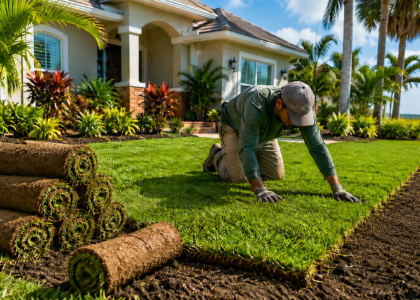
Before replacing damaged grass with new sod, the moisture problem should be evaluated. Installing sod over poorly draining soil may lead to the same damage again.
3. Mulch and Soil Wash Out of Landscape Beds
Heavy rain can move loose landscape materials, but frequent washouts may point to a larger runoff problem.
You may notice mulch collecting on the lawn, sidewalk, driveway, or patio after storms. Soil may also disappear from around plants or create channels through landscape beds.
This usually means water is moving through the area with too much force or entering the bed from an unsuitable direction.
Simply replacing the mulch may improve the appearance temporarily, but it will not correct the water flow. The slope, borders, downspouts, nearby hardscape, and surrounding grade may all need to be reviewed.
4. Grass Develops Repeated Bare or Yellow Areas
Yellow or thinning grass is often blamed on irrigation, insects, or fertilizer. However, excess water can also affect lawn health.
Grass growing in constantly wet soil may become thin, discolored, or easier to pull from the ground. Bare sections may return even after reseeding or sod replacement.
If the damaged area is located in a low section of the yard or near a downspout, drainage may be contributing to the problem.
Not every yellow patch is caused by excess moisture. Sunlight, soil conditions, pests, irrigation coverage, and lawn disease should also be considered before deciding on a solution.
5. Plants Struggle in Certain Landscape Beds
Plants have different water requirements. Some tolerate wet soil better than others, but many landscape plants decline when their roots remain saturated for long periods.
Signs may include yellow leaves, slow growth, leaf drop, soft stems, or plants that repeatedly fail in the same location.
A wet planting bed may be caused by compacted soil, low elevation, irrigation overspray, roof runoff, or landscape edging that prevents water from escaping.
Replacing the plants without addressing the site conditions may result in another failed installation. Drainage, irrigation, sunlight, and plant selection should be evaluated together.
6. Water Collects Near the House
Water should generally move away from the home rather than collecting beside exterior walls.
After heavy rain, check areas near the foundation, entryways, patios, air-conditioning equipment, and downspouts. Look for puddles, washed soil, muddy sections, or water marks on exterior surfaces.
The cause may involve the property grade, roof runoff, a low landscape bed, or a blocked drainage route.
A landscaping contractor can evaluate surface water around the yard, but cracks, leaks, or suspected structural concerns may require assessment by the appropriate building or foundation professional.
7. Pavers or Walkways Are Becoming Uneven
Pavers can shift or settle for several reasons, including poor base preparation, soil movement, erosion, or repeated water flow.
You may notice low spots where water gathers, edges that have dropped, or sections that rock when stepped on. Joint sand may also wash away more quickly in problem areas.
Resetting the pavers without correcting nearby runoff may provide only a temporary improvement.
The surrounding slope, base material, downspouts, landscape beds, and drainage paths should be evaluated before the surface is repaired.
8. Water Flows Across Patios, Driveways, or Walkways
Water crossing a hard surface is not always a problem, but repeated runoff may create slippery areas, carry soil onto the pavement, and make entrances difficult to use.
Watch how water moves during rain rather than looking only after the storm has ended.
You may see water flowing:
- Across the driveway
- Through a side-yard walkway
- Toward a patio door
- Around pool areas
- From one property into another
- From a downspout across a walking route
The goal of a drainage plan is not simply to move water away from one spot. It should direct runoff toward an appropriate location without creating a new problem elsewhere.
9. Soil Is Eroding Around Slopes or Retaining Walls
Erosion occurs when moving water carries soil away from an area.
Small channels may appear on slopes, around plant roots, beside walkways, or behind retaining walls. Soil may collect at the bottom of the slope after each storm.
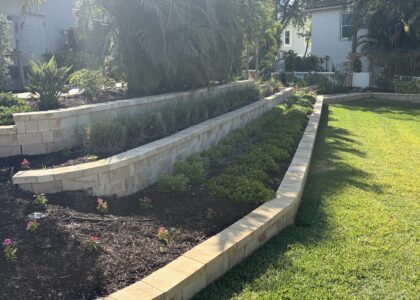
Retaining walls should also be checked for leaning, separation, loose blocks, or soil escaping through joints.
Water collecting behind a retaining wall can place added pressure on the structure. A wall may require drainage material or another method of allowing water to move away safely.
The correct solution depends on the wall, slope, soil, and amount of runoff entering the area.
10. The Same Drainage Problem Keeps Returning
A recurring problem is one of the clearest signs that surface-level repairs are not enough.
You may repeatedly replace mulch, add soil to a low area, reset pavers, or install new sod, only to see the damage return after another season of heavy rain.
This often happens when the visible damage is repaired without correcting the source of the water.
A professional drainage assessment can look at the complete property, including:
- Elevation changes
- Roof and downspout runoff
- Soil conditions
- Irrigation
- Patios and walkways
- Neighboring properties
- Landscape beds
- Retaining walls
- Low lawn areas
- Existing drainage components
Understanding how water enters, crosses, and leaves the property is essential before selecting a solution.
What Can Cause Poor Yard Drainage?
Drainage problems are not always caused by one issue. Several conditions may work together.
Common causes include low spots, compacted soil, improper grading, blocked drainage routes, irrigation leaks, downspout placement, settled soil, and runoff from hard surfaces.
Landscape changes can also affect water flow. A new patio, walkway, retaining wall, fence, or landscape bed may redirect water if drainage was not considered during installation.
Even healthy plant growth can eventually block drains or slow water movement through narrow areas.
Possible Yard Drainage Solutions
The right solution depends on the source of the water and the layout of the property.
Possible options may include:
- Correcting small grading issues
- Redirecting downspout discharge
- Installing catch basins
- Adding underground drainage pipe
- Creating a channel drain near hardscape
- Improving drainage around landscape beds
- Using suitable stone or drainage material
- Correcting irrigation leaks or overspray
- Rebuilding an affected hardscape base
Some properties may need a combination of methods. Installing one drain in the lowest area will not necessarily correct runoff entering from several directions.
Drainage water must also be directed to an appropriate discharge point. It should not be moved onto a neighboring property or into an area where it creates another concern.
Why Drainage Should Be Addressed Before Landscaping
Drainage work is usually best completed before installing new sod, plants, mulch, patios, or walkways.
Underground drainage may require excavation. Grading can also change the elevation and slope of the yard.
Completing the decorative work first may cause new landscaping to be removed or disturbed when the drainage problem is corrected later.
For larger landscape projects, drainage, irrigation, hardscaping, plants, and sod should be planned as parts of one coordinated design.
Do Not Rely on Adding More Soil Alone
Adding soil to a low area may appear to be an easy solution, but it can redirect water into another part of the yard.
The new soil may also wash away if the runoff source remains unchanged. Raising the ground near the house without proper planning could direct water toward doors, patios, or neighboring properties.
Before changing the grade, determine where the water currently comes from and where it will travel after the work is completed.
When to Request a Professional Assessment
Consider requesting a drainage assessment when water remains after storms, erosion keeps returning, new sod repeatedly fails, or runoff is affecting patios, walkways, and landscape beds.
Photographs and videos taken during or shortly after heavy rain can help show how water moves through the property. By the time a contractor visits, the area may have dried and the original flow may be less obvious.
A drainage assessment should consider the entire yard rather than focusing only on the location where water finally collects.
Professional Yard Drainage Solutions in St. Petersburg
Standing water, soggy grass, erosion, failing plants, and uneven pavers may all indicate that water is not moving through the property correctly.
CDS Landscaping provides yard drainage solutions in St. Petersburg, Seminole, Largo, and surrounding Florida communities. Drainage work can also be coordinated with landscape renovation, irrigation, sod installation, patios, pavers, and retaining walls.
Contact CDS Landscaping to request a quote and discuss the drainage concerns affecting your property.