Spring is a good time to step outside and take a close look at your yard. Plants may have grown beyond their intended areas, weeds may be spreading through landscape beds, and leaves or branches may be collecting around patios and walkways.
A spring yard cleanup can improve the appearance of the property while revealing issues that need attention before Florida’s hotter and rainier months arrive. The work may include removing debris, trimming plants, redefining landscape beds, checking irrigation, and preparing damaged lawn areas for improvement.
For homeowners in St. Petersburg, Seminole, Largo, and nearby communities, spring cleanup is also an opportunity to evaluate drainage, pavers, sod, lighting, and other parts of the outdoor space.
Walk Through the Entire Property
Begin by walking around the front yard, backyard, side yards, driveway, walkways, and patio areas.
Look at the property from the street and from inside the home. A landscape may appear acceptable from one direction while looking crowded or unfinished from another.
Make note of areas that contain:
- Dead or damaged plants
- Overgrown shrubs
- Weeds and vines
- Bare or thinning grass
- Faded mulch
- Standing water
- Uneven pavers
- Blocked irrigation heads
- Leaves and branches
- Poorly defined landscape beds
This initial review helps separate basic cleanup tasks from problems that may require landscape renovation, drainage work, sod installation, or irrigation changes.
Remove Leaves, Branches, and Landscape Debris
One of the first spring cleanup tasks is removing material that has collected throughout the yard.
Leaves, branches, palm debris, old mulch, weeds, and other organic material can make the landscape look neglected. Heavy debris may also cover irrigation equipment, drainage openings, paver edges, and the bases of plants.
Clear debris from landscape beds, walkways, patios, fences, and areas around the home. Pay close attention to corners where leaves tend to collect.
Debris should also be removed from drainage paths so water can move through the property as intended.
Clean Up Overgrown Landscape Beds
Landscape beds often lose their shape as plants grow, grass spreads, and mulch moves during heavy rain.
Begin by removing weeds, unwanted seedlings, and dead plant material. Shrubs that have grown into walkways or windows may need to be trimmed.
However, trimming should not be used as a permanent solution for plants that are too large for their location. A shrub that constantly blocks a window or walkway may need to be replaced with a smaller variety.
The cleanup process should preserve healthy plants that still fit the landscape while removing growth that makes the property feel crowded.
Redefine Landscape Bed Edges
Clean bed edges can improve the appearance of the entire yard.
Over time, grass may spread into planting areas and make the original borders difficult to see. Redefining those borders creates a clearer separation between the lawn and landscape beds.
The shape of the beds should complement the home and surrounding features. Curved beds may create a softer appearance, while straight edges may work better with a formal or modern design.
Before expanding a bed, consider irrigation coverage and the mature size of nearby plants. The updated shape should support the long-term landscape plan.
Evaluate Plants Before Replacing Them
Spring is often associated with adding new plants, but replacement should begin with understanding why the existing plants declined.
A plant may struggle because it receives too much shade, too much sun, improper watering, or poor drainage. Replacing it with the same type of plant without correcting the underlying issue may lead to the same result.
When selecting replacements, consider:
- Sunlight throughout the day
- Mature plant height and width
- Water requirements
- Soil drainage
- Distance from the house
- Nearby walkways and driveways
- Expected maintenance
Plants should have enough room to grow without blocking windows, signs, paths, or irrigation equipment.
Refresh Mulch Where Needed
Mulch can give landscape beds a cleaner appearance while helping the soil retain moisture and limiting some weed growth.
Before applying new mulch, remove heavy weed growth and excessive layers of old, compacted material. Adding new mulch directly over weeds does not correct the underlying problem.
Mulch should be spread evenly and kept away from direct contact with tree trunks and plant stems. Piling mulch too deeply around the base of a plant can hold unwanted moisture against it.
The appropriate amount depends on the existing bed, plant type, and material being used.
Check the Condition of the Lawn
Walk across the lawn and look for bare areas, weeds, uneven growth, soft spots, or places where water collects.
Grass may decline because of shade, irrigation problems, drainage, compacted soil, insects, disease, or heavy traffic. The reason should be identified before new sod is installed.
If the lawn has only a few small problem areas, targeted repairs may be appropriate. A lawn with widespread damage may need more complete preparation and sod replacement.
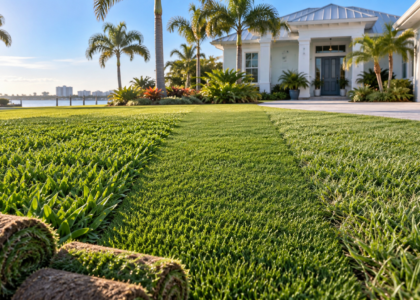
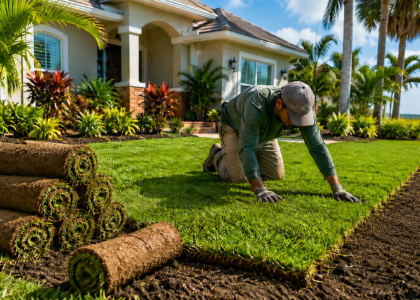
Sod installation should begin with proper grading, soil preparation, and irrigation coverage. The new grass will also need consistent early watering while the root system becomes established.
Test Every Irrigation Zone
An irrigation system may appear to be working even when some parts of the landscape are not receiving enough water.
Run each zone and watch the spray pattern. Look for broken heads, leaks, blocked nozzles, overspray, and areas receiving uneven coverage.
Plants may grow in front of irrigation heads and block the water. Changes to landscape beds may also make the original system layout less effective.
Spring cleanup provides a good opportunity to adjust the system before new plants or sod are installed. Irrigation work should generally be completed before finishing the surface with mulch or new grass.
Look for Drainage Problems
Florida’s seasonal rainfall can expose drainage problems quickly.
After rain or irrigation, look for water collecting near the home, patio, driveway, walkways, or landscape beds. Also watch for washed-out mulch, eroded soil, and muddy lawn areas.
Standing water may be caused by low areas, improper grading, compacted soil, downspouts, or blocked drainage routes.
Drainage concerns should be addressed before installing new sod, plants, or hardscape materials. Otherwise, the completed improvements may need to be disturbed later.
The appropriate solution depends on the property’s slope, layout, soil, and surrounding drainage conditions.
Clean Patios, Walkways, and Pavers
Hardscape surfaces should be included in the spring yard cleanup.
Sweep leaves, soil, weeds, and other debris from patios and walkways. Check paver joints and inspect the surface for low, loose, or uneven areas.
Uneven pavers may indicate base settlement, erosion, or drainage concerns. Affected sections may be able to be lifted and reset, depending on their condition.
Cleaning should follow the material manufacturer’s recommendations. Excessive pressure can damage some surfaces or remove joint sand.
Do not ignore the areas where pavers meet the lawn or landscape beds. Clean edges help define the space and reduce the unfinished appearance caused by spreading grass and weeds.
Inspect Retaining Walls and Landscape Borders
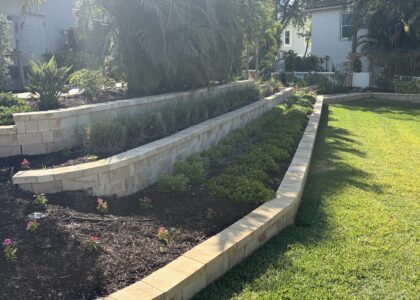
Retaining walls and landscape borders should be checked for movement, loose pieces, cracking, or soil washing through gaps.
A wall that is leaning or separating may have a drainage or base problem. Adding plants or soil around it will not correct the structural concern.
Smaller landscape borders may simply need to be reset or cleared of overgrowth. The border should remain visible and should not create a barrier that traps water in the wrong area.
Check Landscape Lighting
Landscape lighting fixtures may become covered by plants, mulch, soil, or debris.
Clean the fixtures and make sure each light is still directed toward the intended walkway, tree, plant bed, or architectural feature.
Look for damaged fixtures, exposed wiring, weak connections, and lights that no longer work.
Plant growth can change the effect of a lighting design. A fixture that once highlighted a palm may now shine directly into heavy foliage. Small placement adjustments can improve the result.
Avoid Removing Too Much at Once
A spring cleanup can make the yard feel more open, but removing too many plants without a replacement plan may leave the property looking bare.
Healthy trees, palms, shrubs, and established plants may still contribute structure, shade, and privacy. The goal should be to remove unwanted growth while protecting features that fit the updated landscape.
When major changes are needed, it is often better to create a complete plan before clearing the entire area. This helps determine which plants should stay and where new plants, sod, pavers, or other features will be placed.
Decide Whether the Yard Needs Renovation
Some properties need more than a seasonal cleanup.
Landscape renovation may be appropriate when most plants have outgrown their locations, the lawn repeatedly fails, drainage affects several areas, or the outdoor layout no longer fits the homeowner’s needs.
A renovation may combine:
- Landscape cleanout
- Plant removal and replacement
- New landscape bed layouts
- Sod installation
- Irrigation changes
- Drainage improvements
- Paver or patio installation
- Retaining walls
- Landscape lighting
Planning these services together can produce a more coordinated result than completing unrelated changes one at a time.
Create a Yard That Is Easier to Maintain
Spring cleanup should also make future upkeep more manageable.
Consider whether the current landscape contains plants that grow too quickly, beds that are difficult to weed, or lawn areas that are hard to reach with equipment.
Simplifying the layout, improving plant spacing, correcting irrigation, and creating clear borders can reduce ongoing maintenance.
A practical landscape can still include color, texture, and attractive outdoor features. The goal is to create a yard that fits the homeowner’s available time and preferred level of care.
Professional Spring Yard Cleanup in St. Petersburg
A thorough spring yard cleanup can improve curb appeal, uncover hidden problems, and prepare the property for new landscaping.
CDS Landscaping provides landscape cleanout, design, renovation, sod installation, irrigation, drainage, lighting, patio, paver, and retaining wall services in St. Petersburg, Seminole, Largo, and surrounding areas.
Contact CDS Landscaping to request a quote and begin refreshing your Florida yard for the months ahead.