A landscape can change slowly over time. Plants grow beyond their original spaces, shrubs begin covering windows or walkways, mulch beds lose their shape, and parts of the lawn become thin or difficult to maintain.
At first, these problems may seem like normal yard upkeep. After several seasons, however, small issues can combine and leave the entire property looking crowded, outdated, or disconnected.
Landscape restoration focuses on improving an existing yard rather than starting from an empty property. It may involve clearing overgrowth, removing unhealthy plants, updating planting beds, addressing drainage or irrigation concerns, installing new sod, and adding features that fit the way the property is currently used.
For St. Petersburg homeowners, the challenge is knowing when routine trimming is enough and when a broader restoration project makes more sense.
What Is Landscape Restoration?
Landscape restoration is the process of evaluating an existing outdoor area and improving the parts that no longer work well.
The goal is not always to remove everything. Many properties have mature palms, trees, shrubs, hardscape areas, or planting beds that can remain. A restoration plan identifies what should be preserved, trimmed, relocated, replaced, or redesigned.
Depending on the condition of the property, restoration may include:
- Removing overgrown or unwanted plants
- Trimming shrubs and selected tree growth
- Clearing old leaves, mulch, and landscape debris
- Redefining planting beds
- Replacing unhealthy or poorly placed plants
- Correcting sections of uneven grading
- Addressing standing water or runoff
- Reviewing irrigation coverage
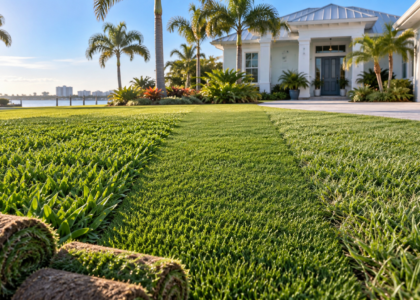
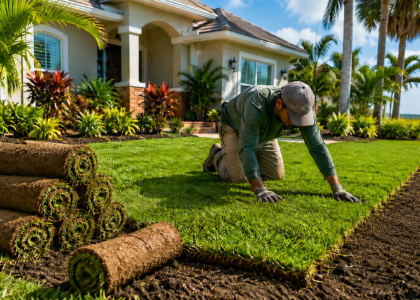
- Installing new sod in larger worn areas
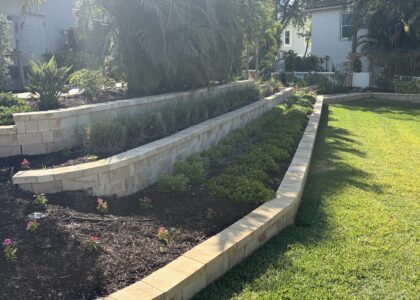
- Updating walkways, patios, edging, or retaining walls
- Adding landscape lighting
The exact scope should be based on the property rather than a standard package.
Signs Your Landscape May Need Restoration
Not every overgrown plant means the entire yard needs renovation. A more complete project may be appropriate when problems are spread across several areas.
The Yard No Longer Has a Clear Layout
A well-planned landscape usually has visible planting groups, defined beds, open lawn areas, and clear paths through the property.
As plants mature, they may begin blending together. Bed lines can disappear, shrubs can cover smaller plants, and the original design may become difficult to recognize.
When the overall structure is lost, trimming one or two plants may not restore the appearance of the yard. The property may need a broader plan that looks at spacing, scale, and how each area connects.
Plants Have Outgrown Their Locations
A plant may have been suitable when it was first installed but become too large for the space over time.
Shrubs may block windows, grow into walkways, press against fences, or crowd air-conditioning equipment. Palms and ornamental plants may also interfere with rooflines, lighting, or nearby plant material.
Some plants can be cut back and managed. Others may continue causing problems because the location does not provide enough room for their mature size.
A restoration plan can help determine which plants should remain and which ones should be replaced with options that better fit the available space.
Several Plants Are Unhealthy or Struggling
One unhealthy plant can often be addressed on its own. When several areas are declining, there may be a larger issue involving sunlight, soil, irrigation, drainage, or plant selection.
A sunny area may now receive more shade because nearby trees have matured. Irrigation coverage may no longer match the plant layout. Some plants may also have been installed in conditions that do not suit their needs.
Simply replacing each struggling plant with the same type may lead to the same result. Restoration provides an opportunity to evaluate the conditions and choose replacements that are better suited to each area.
Landscape Beds Are Crowded or Difficult to Maintain
Landscape beds often collect leaves, weeds, old mulch, branches, and volunteer growth. Their edges may become uneven, and the original spacing between plants may disappear.
Adding new mulch without clearing the bed first can cover debris without resolving the underlying problem.
During restoration, beds can be cleaned out and evaluated. Unwanted plants can be removed, crowded shrubs can be thinned, and open areas can be prepared for new plant material or mulch.
The Lawn Has Large Bare or Worn Sections
Small bare spots may result from foot traffic, pet activity, shade, irrigation problems, or drainage concerns. When damage covers a larger area, patching individual spots may not create an even result.
Before installing new sod, the cause of the lawn decline should be considered. New turf may continue struggling if water collects in the area or irrigation coverage is inconsistent.
CDS Landscaping requires a minimum of 1,000 square feet for sod installation and has a $1,500 labor minimum for sod work. Larger lawn restoration projects may fit these requirements better than isolated patches.
Water Collects in the Yard
Standing water can affect lawns, planting beds, walkways, and other landscape areas.
In St. Petersburg, heavy rain, flat grades, downspout runoff, compacted soil, and changes to surrounding hardscapes can all affect how water moves through a property.
Drainage should be reviewed before installing new plants or sod in a problem area. Depending on the conditions, the project may involve grading, catch basins, underground drainage pipes, French drains, downspout connections, emitter drains, channel drains, or a pump system.
The correct solution depends on where the water begins, where it collects, and where it can be directed.
Irrigation No Longer Matches the Landscape
A landscape often changes while the irrigation system remains the same.
Plants may grow and block spray patterns. Beds may be expanded or reduced. Turf areas may be replaced with plantings, or new hardscape may change the shape of the watering zones.
During restoration, the irrigation system should be reviewed to determine whether it still provides suitable coverage. Updating the yard without considering irrigation can leave new plants receiving too much or too little water.
The Outdoor Space No Longer Fits Your Needs
A property may be landscaped well but no longer suit the homeowner’s routine.
A family may want a clearer walkway, more open lawn space, a larger patio, landscape lighting, or a new fence. Someone who prefers lower maintenance may want fewer crowded beds and a simpler plant layout.
Landscape restoration provides an opportunity to reconsider how the outdoor space is used instead of only restoring its previous appearance.
Cleanout, Restoration, or New Landscape Design?
These services are related, but they do not always involve the same amount of work.
A landscape cleanout primarily addresses overgrowth, debris, unwanted plants, old mulch, and neglected beds. It may be enough when the basic layout still works and the property mainly needs detailed clearing and trimming.
Landscape restoration usually includes broader improvements. It may combine cleanup with plant replacement, bed redesign, sod, irrigation adjustments, drainage work, or selected hardscape updates.
A new landscape design may be more appropriate when the existing layout no longer fits the property or the homeowner wants a major change.
An onsite evaluation helps determine which level of work is appropriate. It also reduces the chance of removing mature plants or usable features that could remain part of the finished landscape.
How the Landscape Restoration Process Works
Although every property is different, a restoration project generally begins with a review of the entire outdoor area.
Evaluate the Existing Yard
The first step is identifying what works and what does not.
This includes reviewing plant health, bed layout, drainage, irrigation, lawn condition, hardscape areas, fences, lighting, and frequently used routes through the yard.
The homeowner should also explain which areas are difficult to maintain and what they want to change.
Decide What Should Stay
Mature trees, palms, healthy shrubs, patios, walkways, and other features may be worth preserving.
Keeping suitable elements can help the new plan feel established instead of completely new. It can also allow the project to focus on the areas that need the most attention.
Clear and Prepare the Property
Before new materials are installed, overgrowth and debris may need to be removed.
This can include trimming, thinning, removing unwanted plants, clearing beds, removing old mulch, and hauling away resulting debris.
Preparation may also reveal grading, irrigation, or drainage problems that were hidden by dense growth.
Address Functional Concerns
Drainage and irrigation should usually be considered before new plants, sod, or hardscape are installed.
If the property has standing water, erosion, poor coverage, broken components, or uneven grades, those issues may affect the restoration plan.
It is better to identify them early than to disturb newly completed landscape work later.
Install the Updated Landscape
Installation may include new plants, redesigned beds, sod, lighting, irrigation, drainage, pavers, a patio, retaining walls, or new fencing.
Paver projects have a 100-square-foot minimum and a $2,500 minimum. Retaining wall work generally has a $2,500 labor minimum.
Fence projects are new installations only and require a minimum of five panels. CDS Landscaping installs vinyl, aluminum, and wood fencing.
Planning a Landscape Restoration in St. Petersburg
A successful restoration should reflect the conditions of the property and the way the homeowner plans to use it.
Before starting, consider:
- Which areas cause the most frustration?
- Which plants or features should remain?
- Are drainage or irrigation problems present?
- Does the yard need more open space?
- Will the project include sod or hardscape?
- How much ongoing maintenance is realistic?
- Should the work be completed in phases?
A clear list of priorities can help keep the project focused. It can also make it easier to separate necessary improvements from optional additions.
Restore Your Outdoor Space With CDS Landscaping
Landscape restoration may be appropriate when a yard has become overgrown, outdated, difficult to maintain, or poorly suited to the property owner’s current needs.
CDS Landscaping provides landscape renovation and restoration in St. Petersburg, Seminole, Largo, Pinellas Park, Clearwater, and surrounding areas. Services may include cleanouts, landscape design, drainage, irrigation, sod installation, hardscaping, landscape lighting, and new fence installation.
Contact CDS Landscaping to schedule an onsite evaluation and discuss which parts of your existing landscape should be preserved, updated, or replaced.