A successful landscape should look connected, fit the size of the property, and support the way the outdoor space is used. Choosing attractive plants is important, but plant selection is only one part of the design.
The location of each bed, walkway, tree, shrub, and hardscape feature affects the overall result. A yard can contain many appealing elements and still feel crowded or disconnected when those elements do not work together.
Landscape design principles provide a structure for planning the property. They help organize the space and guide decisions about plant placement, colors, materials, scale, and movement.
Here are seven important principles to consider when planning a Florida landscape.
1. Unity Connects the Entire Landscape
Unity means that the different parts of the landscape feel like they belong together.
A yard may contain a front entrance, side path, patio, lawn, planting beds, and fence. Each area can serve a different purpose, but the materials and plant choices should create a visual connection between them.
Unity can be created by repeating:
- Similar plant varieties
- Related colors
- Matching edging materials
- Consistent paver styles
- Similar shapes within planting beds
- The same mulch or decorative rock
A small group of plants repeated throughout the yard often creates a more organized appearance than using a different plant in every open space.
Repetition should not make the yard look identical from one end to the other. The goal is to create enough consistency that each section feels like part of the same landscape.
2. Balance Creates Visual Stability
Balance refers to how visual weight is distributed across a landscape.
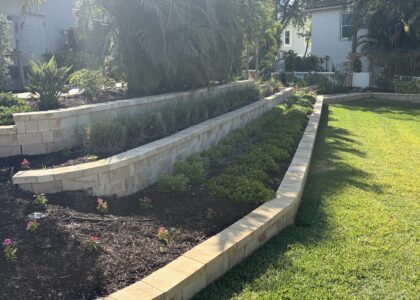
A large tree, dense shrub group, retaining wall, or wide planting bed can make one part of the yard feel heavier than another. The opposite side does not need to contain the exact same features, but it should have enough visual interest to prevent the design from feeling uneven.
There are two common forms of balance.
Symmetrical balance uses similar features on each side of a central point. For example, matching planters or shrubs may be placed on both sides of a front walkway.
Asymmetrical balance uses different elements that carry a similar visual weight. A large palm on one side of the yard might be balanced by a group of smaller shrubs on the other.
Symmetry often creates a more formal appearance. Asymmetry can feel more natural and relaxed. The right approach depends on the home, available space, and desired style.
3. Proportion Keeps Features at the Right Scale
Proportion is the relationship between the sizes of plants, structures, and outdoor features.
A small shrub may disappear against a tall wall. A large plant can overwhelm a narrow planting bed or block a window once it matures. A wide patio may feel out of place in a very small yard if it leaves little room for plants or lawn.
Scale should be considered before anything is installed.
Important questions include:
- How tall and wide will each plant become?
- Will shrubs grow above nearby windows?
- Does the walkway provide enough room for regular use?
- Is the patio appropriately sized for the property?
- Will a tree canopy interfere with the roof or nearby structures?
- Does a retaining wall fit the slope and surrounding landscape?
Plant tags and small samples can make materials appear smaller than they will look after installation. Planning around mature plant size helps reduce crowding and repeated heavy trimming.
4. Rhythm Guides the Eye Through the Yard
Rhythm is created through repetition and gradual changes in the landscape.
It helps guide the eye from one area to another. This may be accomplished by repeating a plant color, leaf shape, edging style, or paver material along a walkway.
For example, a series of matching shrubs can draw attention toward an entrance. Repeated groups of ornamental grasses can connect separate planting beds. A curved walkway can lead visitors toward a patio or garden area.
Rhythm should feel natural. Too much repetition may make the design feel rigid, while too many unrelated features can make the yard appear busy.
Changes in height can also create rhythm. A planting bed might begin with low ground cover, transition to medium shrubs, and finish with a taller palm or accent plant.
This creates a gradual visual movement instead of an abrupt change.
5. Focal Points Give the Landscape Direction
A focal point is an element that attracts attention and gives the surrounding design a sense of purpose.
Possible focal points include:
- A specimen palm or tree
- A colorful plant grouping
- A front entrance
- A curved walkway
- A patio
- A retaining wall
- A decorative planter
- A section of landscape lighting
A property does not need a focal point in every corner. Too many competing features can make it difficult to know where to look.
The strongest focal point should normally relate to the main use of the area. In a front yard, it may be the entrance. In a backyard, it may be a patio, seating area, or large planting feature.
Plants and pathways can then be positioned to direct attention toward that area.
6. Function Should Shape the Design
A landscape must do more than look attractive. It should also support movement, maintenance, drainage, privacy, and normal outdoor activities.
Before choosing plants or materials, consider how the property is used.
A practical landscape plan may need to account for:
- Walking routes
- Access to gates and utility areas
- Outdoor seating
- Trash container movement
- Pet areas
- Children’s play areas
- Lawn equipment access
- Drainage paths
- Irrigation coverage
- Views from windows
- Access to air-conditioning equipment
Walkways should follow natural travel routes. Plants should not block doors, windows, or equipment. Beds should be wide enough for the selected plants without creating unnecessary maintenance.
Function is especially important when planning fences, patios, retaining walls, sod, or drainage improvements. These features can affect how water moves and how people travel through the yard.
7. Simplicity Makes the Landscape Easier to Understand
A simple landscape does not have to be plain. It means that the design uses a clear group of materials, plants, and shapes rather than trying to include every available option.
Too many plant varieties can create a scattered appearance. Several unrelated paver colors, edging materials, and decorative rocks may also compete with each other.
Simplicity can be created by:
- Limiting the plant palette
- Repeating colors and textures
- Using one primary hardscape style
- Keeping bed shapes consistent
- Leaving open space between major features
- Choosing a few strong focal points
Open lawn or mulched areas can give the eye a place to rest. Every section of the yard does not need to be filled with plants.
A simpler layout may also make it easier to understand which plants need trimming, watering, or replacement.
Consider Florida Growing Conditions
Design principles provide the structure of the landscape, but local conditions determine which plants and materials are appropriate.
St. Petersburg and surrounding areas experience strong sun, heat, heavy rain, sandy soil, salt exposure in some coastal locations, and periods of dry weather. Different areas of the same property may also have very different conditions.
Before selecting plants, consider:
- Daily sunlight
- Existing shade
- Soil drainage
- Irrigation coverage
- Roof runoff
- Wind exposure
- Available planting space
- Distance from the coast
- Nearby trees and roots
A plant that performs well in a sunny front yard may struggle in a shaded side yard. Another plant may tolerate heat but require more room than the bed provides.
The design should respond to the conditions of each part of the property rather than applying the same plant choices everywhere.
Plan for Drainage Early
Drainage should be reviewed before planting beds, sod, pavers, or patios are installed.
Standing water may be caused by low grades, compacted soil, roof runoff, nearby hardscape, or limited outlets. Covering a wet area with new plants or turf does not address the source of the water.
Depending on the property, drainage work may include grading, catch basins, underground pipes, downspout connections, French drains, channel drains, emitter drains, or a pump system.
These systems should be planned around the full landscape. A new path, wall, patio, or planting bed can change the way runoff moves through the yard.
Include Irrigation in the Design
Plant placement and irrigation planning should work together.
Turf, shrubs, and planting beds may require different watering patterns. Large plants can also block sprinkler spray as they mature.
An irrigation plan should consider:
- Plant water needs
- Sun and shade
- Zone layout
- Sprinkler placement
- New sod areas
- Existing hardscape
- Drainage concerns
- Future plant growth
Reviewing irrigation before installation can reduce the need to disturb newly completed landscape areas later.
Connect Hardscape and Planting Areas
Hardscape features such as patios, paver walkways, stepping stones, retaining walls, and edging should feel connected to the surrounding plants.
Straight lines may complement a modern home, while softer curves may work better in an informal garden. Paver colors should relate to the home and other materials on the property.
Plants can soften the edges of hardscape, but they should not be installed so close that they quickly cover the walking surface.
CDS Landscaping has a 100-square-foot minimum and a $2,500 minimum for paver projects. Retaining wall projects generally have a $2,500 labor minimum.
Think About Maintenance Before Installation
The amount of upkeep a landscape needs depends partly on how it is designed.
A crowded bed may require frequent trimming. Plants that grow much larger than the available space can become difficult to control. Narrow lawn strips may be awkward to mow, and plants that drop heavy debris may be poorly suited near pools or patios.
Before approving a design, consider how often the property owner is willing to:
- Trim shrubs
- Remove leaves
- Replace mulch
- Maintain lawn areas
- Clear walkways
- Monitor irrigation
- Remove weeds
A realistic maintenance plan helps guide plant quantity, spacing, and bed size.
Create a Landscape Plan With CDS Landscaping
Unity, balance, proportion, rhythm, focal points, function, and simplicity can help turn separate outdoor features into one connected landscape.
The best design also considers Florida growing conditions, drainage, irrigation, mature plant size, and the way the property is used.
CDS Landscaping provides landscape design and installation in St. Petersburg, Seminole, Largo, Pinellas Park, Clearwater, and surrounding areas. The team can evaluate the property and create a plan that brings together plants, sod, irrigation, drainage, hardscape, lighting, and other appropriate features.
Contact CDS Landscaping to schedule an onsite evaluation and discuss a landscape design for your property.