A well-designed landscape can change how a property looks, feels, and functions. It can create a more welcoming entrance, improve the flow of the backyard, provide space for outdoor gatherings, and make routine maintenance easier.
Good landscape design involves more than selecting attractive plants. It brings together plants, grass, patios, walkways, irrigation, drainage, lighting, and other outdoor features as part of one coordinated plan.
For homeowners in St. Petersburg and surrounding Florida communities, the design must also account for heat, strong sunlight, heavy seasonal rain, sandy soil, and fast plant growth. Planning around these conditions can help create an outdoor space that fits the home and remains practical to maintain.
Start With the Way You Want to Use the Yard
Every landscape design should begin with the homeowner’s needs.
Some homeowners want an open lawn where children or pets can play. Others want a quiet sitting area, more privacy, colorful planting beds, or a patio for dining and entertaining.
Before selecting plants or materials, consider how each part of the property should be used.
Possible goals may include:
- Improving the front entrance
- Creating an outdoor seating area
- Adding privacy near a patio or property line
- Replacing an unhealthy lawn
- Improving drainage after heavy rain
- Adding safer walkways
- Reducing difficult maintenance
- Creating more shade
- Highlighting the home after sunset
A clear list of priorities helps guide the design and prevents unnecessary features from being added simply because they look appealing in a photograph.
Evaluate the Existing Property
A landscape plan should respond to the conditions already present on the property.
This begins with evaluating sunlight, soil, drainage, irrigation, existing plants, trees, structures, and elevation changes. The design should also consider doors, windows, driveways, utility equipment, and walking routes.
Some existing features may be worth keeping. A healthy tree, established palm, mature shrub, patio, or walkway can sometimes become part of the new plan.
Other features may need to be changed. Plants may have outgrown their locations, grass may struggle beneath heavy shade, or drainage may direct water toward the wrong area.
Reviewing the entire property before work begins can help uncover concerns that might otherwise affect the finished landscape.
Create a Natural Flow Through the Yard
A well-designed outdoor space should be easy to move through.
Walkways should connect important areas such as the driveway, front entrance, patio, side yard, pool, and garden. Furniture and planting beds should not block doors or create narrow spaces that are difficult to use.
The layout should guide people naturally from one area to another. This can be accomplished with walkways, paver borders, plant placement, lighting, and open lawn areas.
Curves may help create a relaxed or natural appearance, while straight lines can complement a more formal or modern home. The design should match the architecture of the property rather than feeling disconnected from it.
Choose Plants for Their Mature Size
One of the most common landscape problems occurs when plants are selected based only on how they look when young.
A small shrub may eventually grow several feet tall and wide. If it is installed too close to a window, walkway, driveway, or another plant, it may require constant trimming.
Plant selection should consider:
- Mature height and width
- Sunlight requirements
- Water needs
- Soil conditions
- Growth rate
- Flowering seasons
- Maintenance requirements
- Distance from the house
Florida-friendly plants may perform well when they are placed in suitable conditions. However, no plant is appropriate for every location.
Plants that need full sun may struggle beneath trees or roof overhangs. Plants that prefer drier soil may decline in areas that regularly hold water.
Selecting the right plant for each location can help the landscape remain balanced as it grows.
Use Layers to Add Depth
Layering plants of different heights can make a landscape look fuller and more intentional.
Taller plants may be placed toward the rear of a landscape bed or near a wall. Medium-sized shrubs can provide structure, while lower plants and ground covers can define the front edge.
Different textures can also make the design more interesting. Broad leaves, fine grasses, flowering plants, palms, and shrubs can be combined without making the space feel crowded.
Repeating certain plants or colors throughout the property can create a sense of consistency. Too many unrelated plant varieties may make the landscape feel busy or difficult to maintain.
A simple design with thoughtful repetition often looks more polished than one containing every available color and plant type.
Consider the Lawn as Part of the Design
Grass should be planned along with planting beds and hardscape features.
Large lawn areas may provide room for recreation, while smaller lawn sections can create open space between landscape beds. However, grass may struggle in locations with deep shade, poor drainage, or heavy traffic.
Before installing new sod, determine whether the location provides appropriate growing conditions. Soil preparation, grading, and irrigation coverage should also be addressed.
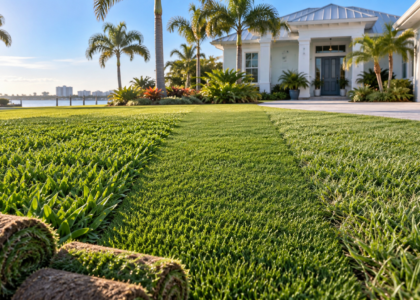
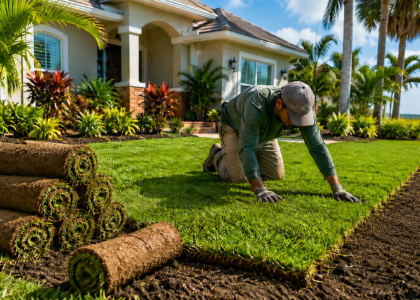
New sod can improve the appearance of a property quickly, but it needs consistent early watering while the roots become established.
The type and amount of grass should fit the homeowner’s maintenance expectations. A landscape does not need to be covered entirely with lawn to look complete.
Plan Irrigation Around the New Landscape
Plants and grass need reliable water, but different areas may have different needs.
A properly planned irrigation system should provide suitable coverage without spraying walls, windows, patios, or driveways. It should also avoid applying the same amount of water to every part of the property when the plants have different requirements.
Changes to the landscape may require irrigation heads or zones to be moved. A former lawn area converted into a planting bed may need a different watering method.
Irrigation should be planned before new sod, plants, pavers, or other materials are installed. This reduces the need to disturb completed work later.
The system should also be tested periodically for broken heads, leaks, clogged nozzles, and uneven spray patterns.
Address Drainage Before Installation
Drainage is especially important in Florida because periods of heavy rain can place significant stress on a yard.
Water may collect in low areas, wash mulch out of planting beds, erode soil, damage grass, or gather near the foundation.
A landscape design should consider where water currently flows and where it should go. Downspouts, slopes, neighboring properties, irrigation runoff, and paved surfaces may all affect drainage.
Depending on the property, improvements may involve grading, redirecting runoff, adjusting planting beds, or installing an appropriate drainage solution.
Drainage should be corrected before installing new sod, plants, patios, or walkways. Completing the decorative work first may make the problem more difficult and expensive to address.
Add Patios and Walkways With a Purpose
Hardscape features can make the yard more useful while creating structure within the design.
A patio can provide a stable area for dining, seating, grilling, or entertaining. Walkways can connect the patio with the house, driveway, pool, or side yard.
Pavers are available in different colors, textures, shapes, and laying patterns. They can be used to create borders, curves, and separate activity areas.
The dimensions should be based on the furniture and activities planned for the space. A patio may look large when empty but feel crowded once a table, chairs, grill, and storage are added.
Hardscape installation should also account for drainage and underground irrigation. The surface should direct water away from the house and toward an appropriate area.
Use Retaining Walls Where Appropriate
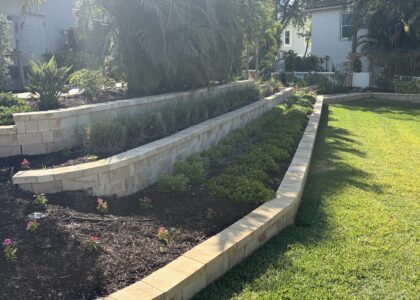
Retaining walls may be used to manage changes in elevation, hold soil in place, or define raised landscape beds.
They can also introduce texture and structure into a landscape design. However, retaining walls should have a functional purpose and be planned around drainage and site conditions.
Improperly designed walls may shift, lean, or contribute to water problems. The required construction depends on the wall’s height, location, soil, and purpose.
A professional assessment can help determine whether a retaining wall is appropriate and how it should fit into the surrounding landscape.
Improve the Design With Outdoor Lighting
Landscape lighting can extend the use of an outdoor space into the evening and highlight selected features after sunset.
Path lights may improve visibility near walkways and steps. Accent lights can draw attention to trees, palms, planting beds, walls, or architectural details.
Lighting should be planned carefully. Too many fixtures can make the yard feel harsh, while poorly positioned lights may shine into windows or neighboring properties.
A few well-placed fixtures often create a better effect than lighting every part of the property.
Wiring and fixture placement should be coordinated with plants, irrigation, patios, and walkways before installation is complete.
Include Privacy Without Closing Off the Yard
Plants, fences, and landscape walls can provide privacy, but they should be used thoughtfully.
Tall shrubs may help screen a patio or neighboring view. However, plants installed too close together can become difficult to manage and may reduce airflow.
A fence can create more immediate separation. The style and material should complement the home and fit the needs of the property.
Privacy does not always require completely blocking every view. Strategic placement around the areas where people sit or gather may be more effective than enclosing the entire yard with dense plants.
Create a Landscape That Fits Your Maintenance Level
An outdoor space should fit the amount of time and effort the homeowner wants to spend maintaining it.
A detailed tropical design may require regular pruning, cleanup, watering, and replacement. A simpler layout with defined plant beds and carefully selected shrubs may be easier to manage.
Before approving a design, consider:
- How often plants will need trimming
- How much grass must be mowed
- How weeds will be controlled
- How fallen leaves will be removed
- Whether irrigation equipment is accessible
- How quickly the plants will grow
- Whether mulch will need regular replacement
A low-maintenance landscape does not need to look empty. Good spacing, durable materials, appropriate plants, and reliable irrigation can create a full appearance without unnecessary work.
Coordinate the Project in the Right Order
Landscape design often involves several services, and the order of the work matters.
A typical project may begin with a cleanout and removal of unwanted materials. Drainage, grading, and irrigation work may follow. Hardscape features can then be installed before plants, sod, mulch, and lighting are completed.
The exact order depends on the property, but underground and structural work should generally happen before delicate finishing materials are installed.
Planning the entire project from the beginning reduces the risk that new sod, pavers, or plants will need to be removed to complete another part of the work.
Refresh an Existing Yard Without Starting Over
Not every property needs a completely new landscape.
Landscape renovation can preserve healthy trees, plants, patios, and other useful features while updating the areas that no longer work.
A renovation may involve removing overgrown plants, reshaping landscape beds, adding new sod, correcting irrigation, improving drainage, or replacing outdated hardscape materials.
This approach can give the property a fresh appearance while keeping the strongest parts of the existing yard.
Professional Landscape Design Services in St. Petersburg
Thoughtful landscape design can help a property feel more attractive, organized, and comfortable to use. The best results come from planning plants, sod, irrigation, drainage, lighting, patios, and other features as parts of one complete outdoor space.
CDS Landscaping provides landscape design services in St. Petersburg, Seminole, Largo, and surrounding Florida communities. Each project can be planned around the property’s conditions, the homeowner’s goals, and the amount of ongoing maintenance desired.
Contact CDS Landscaping to request a quote and begin planning an outdoor space that fits your home and lifestyle.