After a heavy rain, a few puddles in your yard may not seem unusual. But when the same areas stay wet, your lawn becomes muddy, and water collects near the house, it is time to look at how your property drains.
Standing water can make parts of your yard difficult to use. It can also leave grass struggling, wash mulch out of planting beds, and create a mess around patios and walkways.
For homeowners in Pinellas County, a yard sump pump may help when water cannot drain to a suitable outlet on its own. However, the best solution depends on where the water comes from, how the land slopes, and where collected water can safely go.
Understanding those details helps you decide whether a pump belongs in your drainage plan.
Why Does Water Keep Collecting in Your Yard?
Water follows the shape of your property. When rain falls faster than the ground can absorb it, runoff moves toward lower areas.
If those areas have no drainage path, water collects until it slowly soaks into the soil or evaporates. Repeated rain can leave the ground wet before the next storm arrives.
Several conditions can contribute to standing water:
- Low spots that collect runoff.
- Flat ground with little slope.
- Compacted soil that absorbs water slowly.
- Downspouts emptying into poorly drained areas.
- Hard surfaces directing runoff toward the lawn.
- Blocked or poorly placed drainage components.
The puddle itself is only part of the problem. Before choosing a solution, you need to understand what keeps filling it.
CDS Landscaping offers yard drainage solutions that address different causes of water buildup.
What Is a Yard Sump Pump?
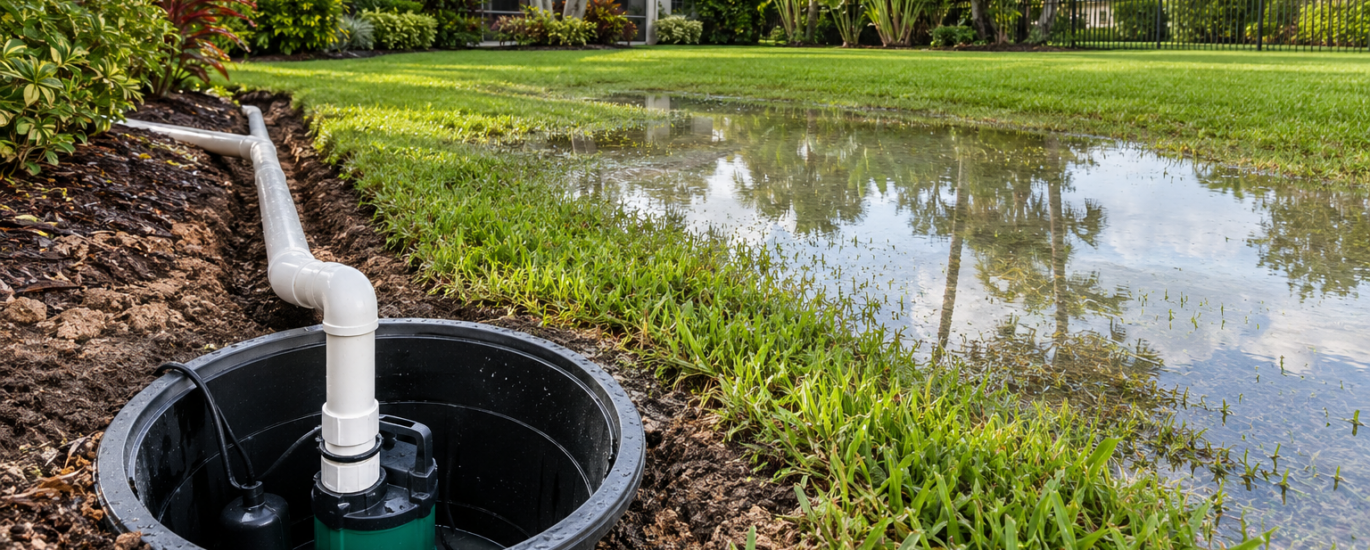
A yard sump pump is part of a system that collects water and moves it through a discharge pipe.
Water enters a collection basin installed in the ground. When the water reaches a set level, a float or other control activates the pump. The pump then sends the collected water toward an appropriate discharge location.
Depending on the design, drains and underground pipes may carry water from several collection points into the basin.
The pump provides the force needed to move water when the property does not have enough natural slope.
A successful installation needs more than a pump in a hole. Basin placement, water collection, pipe routing, electrical supply, and the discharge point all need to work together.
When Can a Sump Pump Help?
A sump pump may be worth considering when water repeatedly collects in a low area and gravity drainage is difficult.
For example, your backyard may sit below the available outlet. An underground pipe alone may not have enough slope to carry water away.
A pump can also be considered when existing structures limit grading changes. Patios, pool decks, fences, and neighboring properties may leave little room to reshape the land.
Signs that deserve a closer look include recurring puddles, muddy side yards, water collecting beside outdoor living areas, and runoff gathering near the home.
These conditions do not automatically mean you need a pump. They mean the property needs an evaluation.
CDS Landscaping provides yard sump pump installation for properties where a pumped drainage solution is appropriate.
Could Grading Solve the Problem Instead?
Sometimes the land needs a better shape rather than a pump.
A shallow depression may collect water because the surrounding soil directs runoff into it. Adjusting the grade can help water move toward a suitable drainage area.
However, adding dirt without a plan can create new problems. Raising one part of the yard may push water toward the house, block an existing drainage path, or affect a neighboring property.
A grading plan should consider the entire area, including buildings, paving, planting beds, and property boundaries.
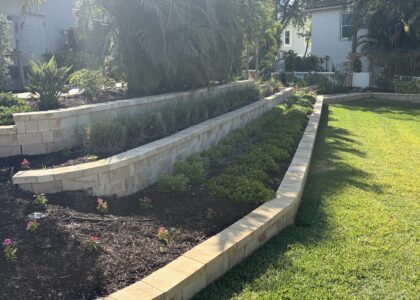
CDS Landscaping’s yard grading and fill dirt services address low spots and drainage patterns.
If gravity can move water effectively, grading or a gravity-fed drain may be a practical option. A site review helps determine which approach fits.
Where Will the Pump Send the Water?
The discharge location is one of the most important parts of the system.
Moving water out of a puddle does not help if it returns to the same area or creates another problem nearby.
The outlet needs to suit the property and the amount of water being moved. It should not direct runoff toward your home or cause problems on neighboring land.
Do not assume a street, storm drain, or public drainage feature is an approved connection point. The installer should confirm any applicable local requirements before finalizing the design.
The receiving area also matters. If it becomes flooded during storms, the system may have difficulty discharging water as intended.
Ask the contractor to explain the proposed outlet and why it is suitable.
How Does the Installer Choose the Pump?
Pump selection should match the job.
The amount of water entering the basin matters, but so does the route the water must travel. Vertical lift, pipe length, pipe size, and fittings affect how much water a pump can move.
A pump’s advertised capacity does not tell the whole story. Its performance needs to be considered under the conditions of your installation.
The basin also needs enough space for the equipment and its controls. A poorly planned setup may lead to frequent cycling or make maintenance difficult.
Ask why the proposed pump and basin are appropriate for your yard. You should receive an explanation based on the collection area and discharge route, rather than a general claim that a larger pump will solve everything.
What About Electricity and Power Outages?
An electric sump pump needs a suitable power supply. Outdoor electrical work should be handled by a qualified professional using equipment appropriate for the location.
During the planning stage, ask where the pump will receive power and whether electrical work is included in the proposal.
Power outages deserve attention because storms can interrupt electricity when drainage is needed.
Ask what happens if power fails. Depending on the system and your property’s needs, backup power or a high-water alarm may be worth discussing.
Backup options have limits, including available runtime and pumping capacity. Make sure you understand those limits before relying on them.
A drainage plan should account for the pump’s dependence on power and the consequences if it stops working.
Can Downspouts Connect to the System?
Roof runoff can contribute a substantial amount of water to one part of the yard.
If a downspout empties beside a low spot, that area may keep filling whenever it rains. Addressing the roof runoff could be an important part of the solution.
In some designs, downspouts can connect to a collection system. In others, extending or rerouting them to a suitable location may be enough.
The system must be designed for any additional water it receives. Connecting roof drainage to an undersized basin or pump can overload it.
Show the contractor where each downspout ends and describe what happens during heavy rain. Photos or videos taken safely from a sheltered location can help explain the flow.
Will a Sump Pump Keep the Entire Yard Dry?
A sump pump manages water that reaches its collection system. It cannot remove every puddle across a property unless the drainage design brings that water to the basin.
Other areas may still need grading, drains, or changes to how runoff is directed.
Heavy rainfall can also exceed a system’s capacity. High groundwater or a flooded discharge area may limit how well the overall plan works.
For that reason, be cautious about promises that your yard will never hold water again.
Ask what improvement the contractor expects, which areas the system will serve, and what conditions could affect its performance. Clear expectations help you judge the proposal fairly.
What Maintenance Does the System Need?
A yard sump pump needs periodic attention.
Leaves, sediment, mulch, and other debris can affect collection points or enter the basin. Controls and moving parts also need to remain clear.
Ask the installer for a maintenance schedule suited to the equipment and site.
Routine checks may include inspecting drain openings, testing pump operation according to the manufacturer’s instructions, and checking the discharge outlet for blockage.
The basin should remain accessible without becoming a trip hazard. Avoid covering access points with permanent landscaping.
If the pump begins running differently, makes unusual sounds, or fails to lower the water level, arrange a check.
Regular maintenance helps identify problems before you depend on the system during a storm.
What Affects Installation Cost?
The cost depends on the complete drainage plan.
Factors may include the number of collection points, excavation depth, basin size, pump requirements, discharge pipe length, and electrical work.
Access also matters. A narrow side yard or a route beneath existing paving may require more labor than an open lawn.
Ask whether the estimate includes restoring disturbed soil, sod, or planting areas. Clarify what happens if excavation reveals an unexpected obstacle.
A detailed proposal should explain the work, equipment, outlet location, and any exclusions.
Comparing complete scopes gives you a better picture than comparing pump prices alone. The system needs to collect, move, and discharge water effectively.
Get a Drainage Plan for Your Pinellas County Yard
If standing water keeps returning, start with an evaluation of the property.
Note where puddles form, how long they remain, and whether the problem occurs after ordinary rain or only during major storms. Share any drainage changes, recent construction, or existing systems with the contractor.
A sump pump may help where gravity cannot move collected water to a suitable outlet. Other yards may benefit from grading or a combination of drainage improvements.
CDS Landscaping can review your concerns and discuss an approach suited to your property.
Contact CDS Landscaping to request an evaluation and learn whether a yard sump pump belongs in your drainage plan.